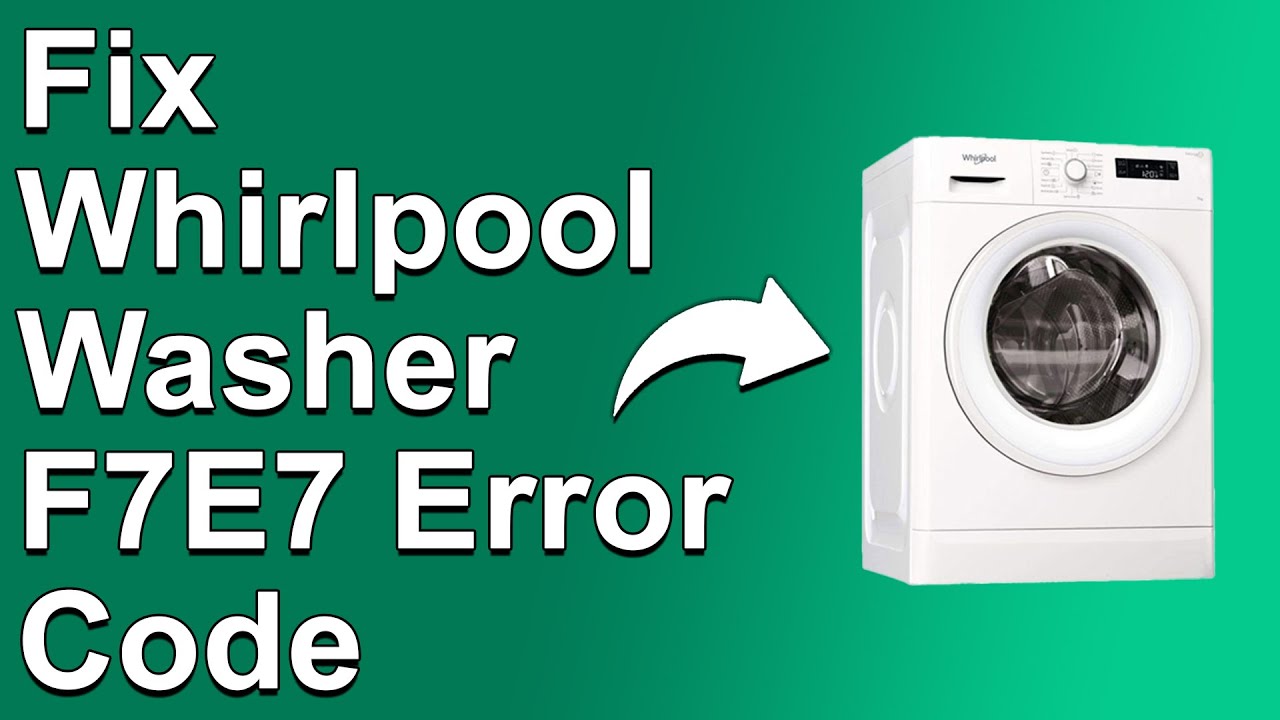
If you’re dealing with the frustration of your Whirlpool washer displaying the error code F7 E4, you’re not alone—many users encounter this issue.
In simple terms, this code indicates a power problem with the control board, which can prevent your washer from operating properly. The good news is that this is a common issue, and often, the causes are straightforward with DIY solutions available.
One common reason for this error could be faulty wiring or connections, which can easily be checked and fixed. However, that’s just one aspect of the problem.
To get a comprehensive understanding of the F7 E4 error code, including other potential causes and solutions, be sure to read through the entire post.
With the right knowledge, you’ll be well-equipped to tackle this issue head-on and get your washer back in working order.
What Does the Error Code Mean?
When your Whirlpool washer shows the error code F7 E4, it points to an issue with the motor control system, particularly concerning the motor’s speed sensor. This error indicates that the washer’s control board is having trouble reading the motor’s operational speed, which can disrupt the washing cycles.
To tackle this issue, start with a thorough diagnosis of the control board. First, inspect the connections to the speed sensor for any loose wires or signs of corrosion. These connections must be secure and free from damage to ensure proper communication between the control board and the speed sensor.
If the connections appear to be in good condition, the next step is to test the speed sensor for functionality. A malfunctioning speed sensor can cause the control board to misinterpret the motor’s speed, leading to the error code. If you find that the speed sensor is indeed faulty, it will need to be replaced.
Common Causes of the Error Code
Identifying the Key Factors Behind the F7 E4 Error Code
Cause 1
One common cause of the Whirlpool Washer error code F7 E4 is a malfunctioning door lock assembly. When this component fails, it can disrupt the power supply to the circuit board, which results in the error code appearing. To ensure your washer operates smoothly, it’s important to conduct a visual inspection of the door lock for any signs of damage or excessive wear. Below is a helpful reference table to guide you through the troubleshooting process:
| Component | Check For | Action |
|---|---|---|
| Door Lock Assembly | Physical damage | Replace if necessary |
| Wiring Connections | Loose or frayed wires | Secure or replace wires |
| Circuit Board | Burnt components | Inspect thoroughly and consider repair or replacement |
Cause 2
Is your Whirlpool washer having trouble communicating with its control board? This can happen due to various electrical issues that disrupt the signals between different components. Let’s dive into some common causes you might want to check:
- Loose Connections: Over time, wires can become loose or disconnected. This interruption can prevent the flow of information between the control board and other parts of the washer.
- Damaged Wiring: Inspect the wiring for any signs of fraying, corrosion, or breaks. Damaged wires can create communication failures that affect your washer’s performance.
- Faulty Control Board: Sometimes, the control board itself may be malfunctioning. If it’s not processing signals correctly, your washer won’t operate as it should.
- Power Supply Fluctuations: Unstable power supply can lead to inconsistent performance. If your washer experiences power surges or drops, it might misinterpret signals due to these fluctuations.
Cause 3
If your Whirlpool washer is showing the F7 E4 error code, it suggests that there are issues with either the motor control or the speed sensor. One prevalent cause for this error is a faulty power supply to the control module. When the power supply is unstable, it can interrupt the communication between the control module and the motor control board, which triggers the error code.
To start troubleshooting, examine the power cord for any visible damage and ensure it is securely plugged into a properly functioning outlet. It’s also wise to check the outlet itself for the correct voltage, as insufficient power can lead to operational issues.
Another potential culprit is a malfunctioning control module, which may not send the correct signals to the motor. If you suspect this is the case, you can use a multimeter to test the control module’s functionality. Remember, safety is paramount, so ensure you disconnect the washer from the power source before performing any tests. By following these steps, you can effectively diagnose and address the F7 E4 error code with confidence.
Cause 4
When troubleshooting your Whirlpool washer for the F7 E4 error code, it’s essential to consider the wiring harness as a potential culprit. A damaged or loose wiring harness can hinder communication between the control board and other vital components, leading to this error. Here are some common wiring issues to investigate:
- Frayed Wires: Carefully inspect the wiring for any visible damage or wear. Frayed wires can cause intermittent connections or shorts, leading to error codes.
- Loose Connections: Check all plugs and connectors to ensure they are firmly attached. Loose connections can disrupt the flow of electricity and signal between components.
- Corrosion: Examine the connectors for any signs of rust or corrosion. Corroded connectors can impede electrical flow and may need cleaning or replacement.
- Wear and Tear: Regular preventive maintenance is key. Over time, wires can deteriorate, so performing routine checks can help catch issues before they escalate.
Addressing these wiring concerns promptly is crucial not only for preventing further damage but also for maintaining your warranty coverage. If you’re ever unsure about the repairs or need assistance, consult your user manual or reach out to a professional technician. Remember, safety comes first, and it’s always better to seek help than to risk injury or further damage to your appliance.
Required Tools to Fix the Error
Essential Tools for Troubleshooting the F7 E4 Error
Basic Tools
When addressing the Whirlpool washer error F7 E4, having the right tools at your disposal is crucial for a successful repair. With over 20 years of experience in appliance repair, I’ve found that using the correct equipment not only simplifies the process but also enhances safety. Here are the essential tools you’ll need for effective troubleshooting:
- Multimeter – This tool is vital for testing electrical components within your washer. It helps you determine whether these components are functioning correctly, allowing you to pinpoint the issue accurately.
- Screwdriver Set – A reliable screwdriver set is essential for accessing the control board and other internal parts of the washer. Make sure to have both flathead and Phillips screwdrivers to tackle various screws.
- Pliers – A good pair of pliers will come in handy for gripping and manipulating wires or connectors during the repair process. They can help you safely detach components without damaging them.
- Flashlight – Having a flashlight is invaluable when working inside the washer, particularly in dimly lit areas. It allows for better visibility, helping you inspect components more thoroughly.
Supplies
If you’re dealing with the Whirlpool washer error F7 E4, having the right supplies is crucial for a successful repair. Let’s break down what you’ll need to tackle this issue effectively.
- Multimeter: This is your best friend for diagnosing electrical problems. Use it to check the power supply and ensure that the voltage levels are within the manufacturer’s specifications. This step can help you identify whether the issue is related to the power supply or something else.
- Screwdriver Set: A good quality screwdriver set will be essential for accessing the control board and any electrical connections. Make sure you have both Phillips and flathead screwdrivers, as different screws may be used in your washer.
- Wire Stripper: If you come across damaged or frayed wires during your inspection, a wire stripper is invaluable for safely removing the insulation and preparing the wires for repair.
- Electrical Tape: Have some electrical tape on hand to secure any connections you make after repairs. This will help ensure that your repairs are safe and reliable.
- Replacement Control Board: If your diagnostics point to a faulty control board, having a replacement on hand can save you time and get your washer back in working order quicker.
Pre-Safety Checklist Before Fixing
Before you begin fixing your Whirlpool washer, prioritizing safety is essential to prevent any potential hazards. By following these safety precautions, you can ensure a smooth and secure repair process:
- Unplug the appliance: Start by disconnecting your washer from the power source. This is a crucial step to eliminate any electrical risks while you work.
- Check for leaks: Take a moment to inspect the area around your washer for any signs of water leaks. Water on the floor can create a slip hazard, so it’s important to address this before you start your repairs.
- Use insulated tools: When working on the control board or any electrical components, always use insulated tools. This helps minimize the risk of electrical shock, keeping you safe during the repair.
- Wear protective gear: Equip yourself with safety glasses and gloves. These items will protect you from potential injuries caused by sharp edges or electrical parts, ensuring that you stay safe throughout the repair process.
Diagnose the Error Code
To effectively address the F7 E4 error code on your Whirlpool washer, it’s important to first understand what this code indicates. The F7 E4 error typically points to an issue with the control board’s power supply, which can stem from several factors. Diagnosing error codes accurately requires careful observation of the control panel signals and any unusual behaviors exhibited by your washer.
Here’s a breakdown of the signals you might encounter, along with their interpretations:
| Signal | Interpretation |
|---|---|
| Flashing lights | Indicates a possible communication failure |
| Beeping sounds | Alerts from the control board about an error |
| Steady light | Signifies normal operation or an idle state |
| Intermittent signals | Suggests potential wiring issues |
As you check your washer, start by observing these signals closely. If you notice flashing lights or hear beeping sounds, these are clear indicators that the control board is encountering a problem. It’s crucial to address these issues promptly to prevent further complications.
In addition to these signals, consider the following troubleshooting steps:
- Inspect the Power Supply: Ensure that your washer is properly plugged in and that the outlet is functioning. A tripped circuit breaker or blown fuse can lead to power issues.
- Examine Wiring Connections: Check the wiring harness for any signs of damage or loose connections. A poor connection can disrupt communication between components.
- Reset the Control Board: Sometimes, a simple reset can clear temporary glitches. Unplug the washer for a few minutes, then plug it back in to see if the error resolves.
- Consult the User Manual: Your washer’s user manual may provide additional insights specific to your model regarding the F7 E4 error.
If the error persists after these steps, it may be time to consult a professional technician who can perform a more thorough diagnosis and repair. Remember, safety is paramount when working with electrical appliances. Always unplug your washer before attempting any repairs.
Step-by-Step DIY Troubleshooting Guide
Next Steps for Troubleshooting the F7 E4 Error
Fix for Cause 1
How do you address the F7 E4 error on your Whirlpool washer? Let’s focus on resolving a potential power issue with the control board. Here’s a step-by-step guide to help you through the process safely:
- Unplug the washer: Start by disconnecting the washer from the power source for at least five minutes. This helps to reset the control board and ensures your safety while you inspect the machine.
- Inspect the power cord: Carefully examine the power cord for any signs of fraying, cuts, or other damage. A compromised power cord can disrupt power delivery to the control board, leading to errors.
- Examine the control board: Open the control panel and take a close look at the control board. Check for burnt components, discoloration, or loose connections. These issues can hinder proper power flow and trigger the F7 E4 error.
- Reconnect and test: After ensuring that all connections are secure and there are no visible issues, plug the washer back in. Run a quick cycle to see if the F7 E4 error persists.
Fix for Cause 2
If you’ve ruled out power issues and the F7 E4 error still appears, it’s time to take a closer look at potential communication problems between the control board and the motor. First, prioritize your safety by unplugging the washer. Next, locate the wiring harness that connects the control board to the motor. Carefully inspect this harness for any signs of damage, such as frayed wires or corrosion that could impede communication.
Once you’ve ensured the wiring appears intact, check the connectors to make sure they fit securely. A loose connection can often cause communication errors. To dive deeper, use a multimeter to test the power supply to both the control board and the motor. Make sure the voltage levels are consistent with the specifications outlined in your washer’s manual. If you notice any discrepancies, this could indicate a faulty control board.
If all tests come back normal but the error persists, it may be best to consider replacing the control board. This component is crucial for proper communication between the washer’s systems and may be the source of the issue. Remember, taking these steps will help you diagnose the problem accurately and safely.
Fix for Cause 3
While you’re troubleshooting the F7 E4 error, it’s essential to consider potential mechanical issues that could impact the washer’s performance. To ensure the control board is receiving an adequate power supply, follow these actionable steps:
- Inspect Wiring: Carefully check all wiring connections to the control board. Ensure they are secure and free from any signs of wear or damage, as loose or frayed wires can interrupt the power supply.
- Examine Power Supply: Verify that the outlet supplying power to the washer is functioning correctly. You can do this by testing the outlet with a multimeter to ensure it provides the required voltage.
- Check Components: Look for any burnt or visibly damaged components on the control board. Components such as resistors or capacitors that show signs of damage can disrupt the flow of power and may need to be replaced.
- Test Continuity: Utilize a multimeter to test the continuity of the wiring harness leading to the control board. This step will help confirm that the wiring is intact and that there are no breaks that could prevent power from reaching the control board.
Fix for Cause 4
When dealing with the F7 E4 error related to your washer’s motor control, it’s important to approach the situation safely and methodically. Here’s a step-by-step guide to help you troubleshoot and potentially resolve the issue.
- Safety First: Begin by unplugging your washer to ensure your safety while you work on it.
- Access the Control Board: Remove the back panel of your washer to gain access to the control board. This is typically done by unscrewing several screws; keep them in a safe place for reassembly.
- Inspect the Control Board: Look for any visible damage on the control board, such as burnt components or discoloration. If you find significant issues, replacing the control board might be necessary.
- Check Power Supply: Use a multimeter to measure the voltage at the connector of the control board. Refer to your user manual for the specific voltage specifications your model requires. If the voltage is lower than expected, there may be an issue with the power supply.
- Examine Wiring: Inspect the wiring leading to the control board. Look for loose connections, frayed wires, or any signs of wear and tear that could affect performance. Tighten any loose connections and replace any damaged wiring.
- Reassemble and Test: Once you’ve completed these checks and repairs, carefully reattach the back panel, plug the washer back in, and run a test cycle to see if the F7 E4 error persists.
Call a Professional If
When you encounter the Whirlpool washer error F7 E4, it’s important to recognize when it’s best to call in a professional. While you can often handle minor issues through DIY troubleshooting, there are certain scenarios where expert assistance is necessary for a safe and effective repair. Here are some key indicators that it’s time to seek help from a qualified technician:
Recognizing when to call a professional for Whirlpool washer error F7 E4 is crucial for safe and effective repairs.
- Persistent Error: If the F7 E4 error continues to appear even after multiple resets and your troubleshooting efforts, it’s a clear sign that the issue may be more complex than it seems.
- Unusual Noises or Odors: Pay attention to any strange sounds or burning smells that occur during operation. These could indicate serious underlying problems that could worsen if not addressed promptly.
- Visible Damage: If you inspect the control board and notice any physical damage, such as burn marks or frayed wires, it’s critical to call a professional. Attempting to fix this on your own can lead to further damage or even safety hazards.
- Lack of Tools or Expertise: If you find yourself lacking the appropriate tools or the necessary knowledge to safely diagnose electrical components, it’s best to leave it to an expert. Safety should always be your top priority.
If you observe any of these warning signs, don’t hesitate to reach out to a qualified technician. They have the experience and training to identify the root cause of the problem and implement the right fixes. This not only resolves the current issue but also helps prevent future complications, ultimately extending the life of your washer. Remember, it’s always better to be safe than sorry when it comes to appliance repairs.