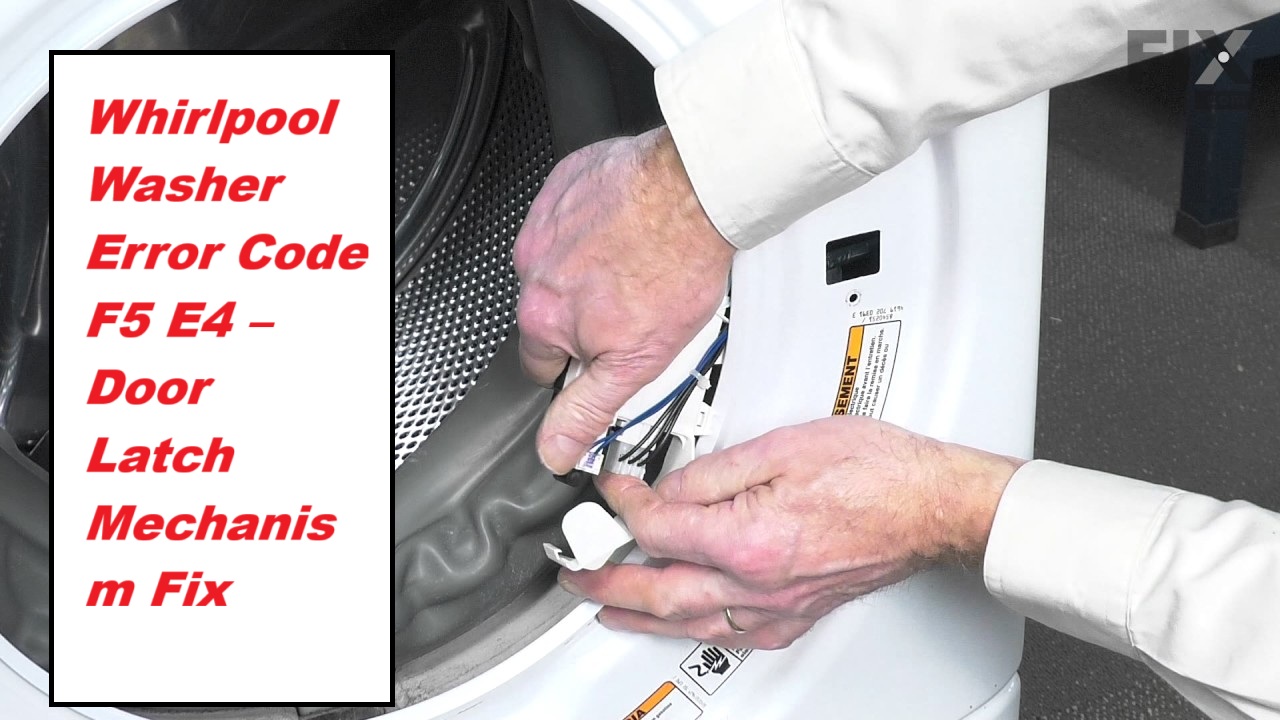
We’ve all been there—your Whirlpool washer is chugging along, and then it suddenly stops with the frustrating F5 E4 error code flashing on the display. This code indicates a problem with the door latch mechanism, which can put a halt to your laundry day.
Don’t worry; you’re not alone in facing this issue, and the good news is that many causes are simple enough to tackle yourself.
This error typically means that the washer is having trouble locking or detecting the door properly, which can prevent it from completing its cycle. One common cause for this issue is an obstruction in the door latch or a misalignment that prevents it from engaging correctly.
To help you navigate this problem, we recommend reading through the entire post. We’ll cover everything you need to know about the F5 E4 error code, including other potential causes and solutions, so you can get your washer back to working order in no time!
What Does the Error Code Mean?
When your Whirlpool washer displays the error code F5 E4, it signals an issue with the door lock mechanism. This code indicates that the washer is unable to secure the door properly during operation. Let’s break this down.
The door latch mechanism is crucial for ensuring a tight seal, which prevents water leaks and maintains safe operation. If the latch isn’t working correctly, the problem could stem from a few common areas: a faulty latch assembly, issues with the wiring, or a malfunctioning control board.
Understanding the role of the latch mechanism is key to troubleshooting this issue effectively. If you encounter this error, it’s important to address it promptly to restore your washer’s functionality and prevent any further complications.
Here’s how you can approach the situation:
- Check the Door Latch: Inspect the door latch for any visible damage or obstructions. Sometimes, debris can prevent it from securing properly.
- Inspect Wiring: Examine the wiring connected to the latch for any signs of wear or damage. Loose or frayed wires can disrupt the latch’s operation.
- Test the Control Board: If the latch and wiring appear to be in good condition, the control board may be the culprit. This component manages the signals for the door lock, and if it’s malfunctioning, it may need professional attention.
Always refer to your user manual for specific troubleshooting steps related to the F5 E4 error code. If you’re not comfortable performing these checks yourself, it’s wise to consult a qualified technician. Taking these steps will help ensure your washer operates safely and efficiently.
Common Causes of the Error Code
Common Causes of the F5 E4 Error Code
Cause 1
If your Whirlpool washer is displaying the F5 E4 error code, it typically indicates a problem with the door lock mechanism. This can arise from a malfunctioning door latch, which may prevent your washer from operating as it should. To resolve this issue, it’s important to inspect both the latch and the wiring harness connected to it.
Here’s a helpful breakdown of common causes for the F5 E4 error code, along with their descriptions and solutions:
| Cause | Description | Solution |
|---|---|---|
| Door Latch | Misalignment or damage to the latch | Inspect the latch for damage and replace it if necessary. |
| Wiring Harness | Loose or damaged connections | Ensure all connections are secure and repair any damage. |
| Control Board | Faulty control board signals may be the culprit | Test the control board and replace it if needed. |
| Door Seal | A worn or damaged seal can affect the latch’s function | Inspect the door seal for wear and replace if necessary. |
Cause 2
After addressing the door latch and its components, it’s important to consider other potential causes of the F5 E4 error code. One frequent issue can stem from a faulty electrical connection. If the wiring harness linked to the door latch is damaged, loose, or corroded, this can disrupt the communication between the latch and the control board. Such a disconnection can trigger the error code, preventing your washer from functioning properly.
To diagnose this issue, start by inspecting the wiring for any visible signs of wear, such as fraying or broken wires. Look closely at the connectors to ensure they are securely attached and free from any corrosion. If you do find any problems, repairing or replacing the damaged connections can often resolve the error.
Cause 3
While inspecting the door latch and wiring is essential, another common cause of the F5 E4 error code can be a malfunctioning control board. The control board acts as the brain of your washer, and if it isn’t functioning correctly, it may not communicate properly with the door latch mechanism. This miscommunication can lead to mechanical failure, triggering the error code even if the door latch itself seems to be in good condition.
To diagnose a potential control board issue, start by visually inspecting it for any signs of damage, such as burnt components or discoloration. If you do notice any abnormalities, replacing the control board could resolve the error. Remember, safety is paramount—always disconnect the washer from the power source before performing any repairs to avoid electrical hazards. By following these steps, you can confidently assess and address the issue, bringing your washer back to optimal performance.
Cause 4
Another common cause of the F5 E4 error code is related to the wiring connections associated with the door latch. If the electrical connection of the door latch is faulty or damaged, the washer may not recognize that the door is properly closed, leading to this error.
To address this issue, begin by carefully inspecting the wiring harness connected to the door latch. Look for any signs of wear, fraying, or corrosion that could interfere with the electrical flow. A loose or damaged connector can also be a problem, so it’s essential to ensure that all connections are securely fastened.
If you identify any damaged wires or connectors, repair or replace them as necessary. Remember, maintaining proper electrical connections is crucial for the door latch to operate correctly and to prevent the F5 E4 error code from occurring during wash cycles. Always prioritize safety when working on your appliance, and if you’re uncertain, don’t hesitate to consult a professional technician for assistance.
Required Tools to Fix the Error
Essential Tools for Repairing Whirlpool Washer Error Code F5 E4
Basic Tools
When dealing with the Whirlpool washer error code F5 E4, having the appropriate tools at your disposal is crucial for a successful repair. As an experienced appliance repair technician, I can assure you that being well-prepared not only streamlines the repair process but also enhances your safety. Here’s a straightforward guide to the essential tools you’ll need:
| Tool | Purpose |
|---|---|
| Screwdriver | To remove and secure screws |
| Pliers | To grip, twist, or cut wires |
| Multimeter | To test electrical components |
| Socket set | For loosening or tightening bolts |
Using these tools effectively will improve your troubleshooting skills, especially when addressing issues with the door latch mechanism. Remember, safety is paramount, so always ensure the washer is unplugged before you start any repairs. By preparing adequately, you can tackle the F5 E4 error with confidence and make the repair process smoother and more manageable.
Supplies
Having the right supplies is essential for effectively addressing the Whirlpool washer error code F5 E4. As a seasoned appliance repair technician, I can tell you that starting with the right tools makes all the difference. First, you’ll need a screwdriver set. This will allow you to remove the washer’s panels and access the door latch mechanism, which is key to resolving this issue.
A multimeter is another indispensable tool for your repair toolkit. It will help you test electrical components, ensuring that both the water inlet and door latch are functioning correctly. If you encounter any stubborn clips or wiring, a pair of pliers can be quite handy.
Additionally, keep a clean cloth nearby. This will be useful for wiping down the washer drum and surrounding areas, ensuring everything is tidy and in good condition during your repair process.
Before you begin any repairs, always remember to disconnect the power supply. This is a critical safety step to protect yourself while you work. By following these guidelines and using the right tools, you’ll be well on your way to troubleshooting and fixing the error code effectively. Stay safe, and good luck!
Pre-Safety Checklist Before Fixing
Before you begin repairs on your Whirlpool washer showing the F5 E4 error code, ensuring your safety is paramount. Start by unplugging the washer from the wall outlet to eliminate any risk of electrical shock. It’s crucial to work in a dry, organized environment; this will help you avoid slips and falls, which can happen easily in tight spaces.
Make sure to wear the appropriate safety gear, including gloves to protect your hands from sharp edges and goggles to shield your eyes from debris. Check for any signs of water leaks around the washer, and keep some absorbent towels nearby to manage any spills promptly.
Take a moment to familiarize yourself with the user manual; it contains vital information about the components you’ll be working on and their functions. Understanding how your washer operates will not only aid in your repairs but also enhance your overall safety.
Diagnose the Error Code
With safety measures firmly in place, let’s take a closer look at diagnosing the F5 E4 error code on your Whirlpool washer. First and foremost, it’s essential to consult your user manual, which provides specific troubleshooting steps tailored to this error.
Begin by checking the door latch to ensure it is engaging properly. A loose or damaged door latch can easily trigger the F5 E4 error code. If the latch appears to be faulty, it will need to be replaced.
Next, inspect the wiring connected to the door latch mechanism. Look for any signs of wear, fraying, or disconnection. A common issue can be a break in the wire, which can disrupt the circuit.
To ensure the latch circuit is functioning correctly, use a multimeter to check for continuity. This step is crucial; if the multimeter does not show continuity, it indicates that the door latch or its wiring may need attention.
If you’ve thoroughly checked the door latch and its wiring and you still see the F5 E4 error code, it may be time to delve deeper into the control board. This component can sometimes fail, leading to communication issues with the door latch. If you’re not comfortable with this level of troubleshooting, I highly recommend seeking professional assistance.
Step-by-Step DIY Troubleshooting Guide
Next Steps for Troubleshooting the F5 E4 Error
Fix for Cause 1
If your Whirlpool washer is showing the F5 E4 error code, it typically points to an issue with the door lock or lid switch assembly. Let’s walk through some steps to help you diagnose and potentially fix the problem safely.
First and foremost, ensure your safety by unplugging the washer. This is crucial before you begin working on any electrical appliance. Once it’s powered down, take a moment to examine the door latch. Look for any visible damage, such as cracks or misalignment, and check for any obstructions that might prevent it from functioning properly. If you notice that the latch seems stuck, you can gently clean it to remove any debris.
Next, you’ll want to inspect the wiring connected to the door lock. Look for any signs of frayed wires or loose connections, as these can frequently cause communication issues with the washer’s control board. If the wiring appears intact, it’s a good idea to test the door switch using a multimeter. This tool will help you confirm whether the switch is providing continuity when the door is closed. If the multimeter indicates that the switch is faulty, you will need to replace it.
Once you’ve addressed the door lock and switch, reassemble any parts you’ve removed and plug your washer back in. It’s important to make sure everything is securely in place before doing so. Finally, run a test cycle to see if the F5 E4 error code reappears.
Fix for Cause 2
When dealing with the F5 E4 error code, it’s essential to consider a faulty control board as a potential cause. To ensure your safety, start by unplugging the washer. Next, carefully remove the control panel by unscrewing the necessary screws and disconnecting the wiring connector.
Take a close look at the control board for any visible signs of damage, such as burn marks, broken components, or disconnected wires. If you detect any issues, replacing the control board is often the best course of action. After replacing it, reconnect the wiring connector and reassemble the control panel securely.
Once you’ve put everything back together, plug the washer back in and run a test cycle to see if the error code reappears. If the F5 E4 error persists, further troubleshooting will be necessary to explore other potential causes, such as wiring issues or sensor malfunctions. Remember, always prioritize safety and if you’re uncertain about any step, don’t hesitate to consult a professional technician.
Fix for Cause 3
If you’ve ruled out the control board as the source of the issue, it’s important to examine the door lock assembly, as a malfunction here can also trigger the F5 E4 error code. Safety is paramount, so start by unplugging the washer from the power source.
To access the door latch, you’ll need to remove the front panel of the washer. Carefully inspect the door latch for any signs of damage or excessive wear. If it appears to be in good condition, take a closer look at the wiring harness connected to the door latch. It’s essential to check for any loose, frayed, or broken wires, as these can cause connectivity issues.
If you spot any problems with the wiring, make sure to repair or replace it as necessary. After addressing any identified issues, reassemble the washer, plug it back in, and run a test cycle to see if the error code has been resolved. This thorough approach should help you determine if the door lock assembly is indeed the culprit behind the error code. Remember, taking your time and ensuring safety during this process is key to effective troubleshooting.
Fix for Cause 4
To effectively address the F5 E4 error code in your washer, it’s essential to examine the pressure switch, as a malfunction here can significantly impact the machine’s performance. Here’s a straightforward guide to help you troubleshoot this issue safely:
| Step | Action |
|---|---|
| 1. Power Off | Always unplug the washer to ensure your safety while you work. |
| 2. Locate Pressure Switch | The pressure switch is typically situated near the door latch area. |
| 3. Check Electrical Connections | Carefully inspect all electrical connections to identify any loose or damaged wires. |
| 4. Test the Switch | Utilize a multimeter to test the functionality of the pressure switch. This tool will help you confirm whether the switch is operating correctly. |
If you determine that the pressure switch is faulty, it’s important to replace it to restore proper function. Additionally, ensure that the door latch is secure and that all electrical connections are intact. Following these steps will help eliminate the F5 E4 error and get your washer back to optimal performance. Remember, safety first—take your time and don’t hesitate to consult a professional if you’re unsure about any step.
Call a Professional If
If you’ve been troubleshooting your Whirlpool washer and the F5 E4 error code continues to show up, it may be time to call in a professional. Ignoring this issue can lead to more significant problems, which might increase repair costs and even affect your safety. A qualified technician can accurately diagnose the root cause of the error, ensuring that all components are working as intended.
Professional repair technicians come equipped with the right tools and expertise to carry out effective repairs. They understand the intricacies of these machines and can navigate complex issues that may not be apparent to the average homeowner. Attempting to fix these problems on your own, especially if you’re not familiar with appliance repair, can pose safety risks, such as electrical shocks or additional mechanical failures.
It’s important to prioritize your safety and the longevity of your washer. If your DIY attempts haven’t resolved the problem, reaching out for professional help is the best decision you can make. Trusting the experts ensures that your appliance will be restored to optimal performance without the risks associated with amateur repairs.