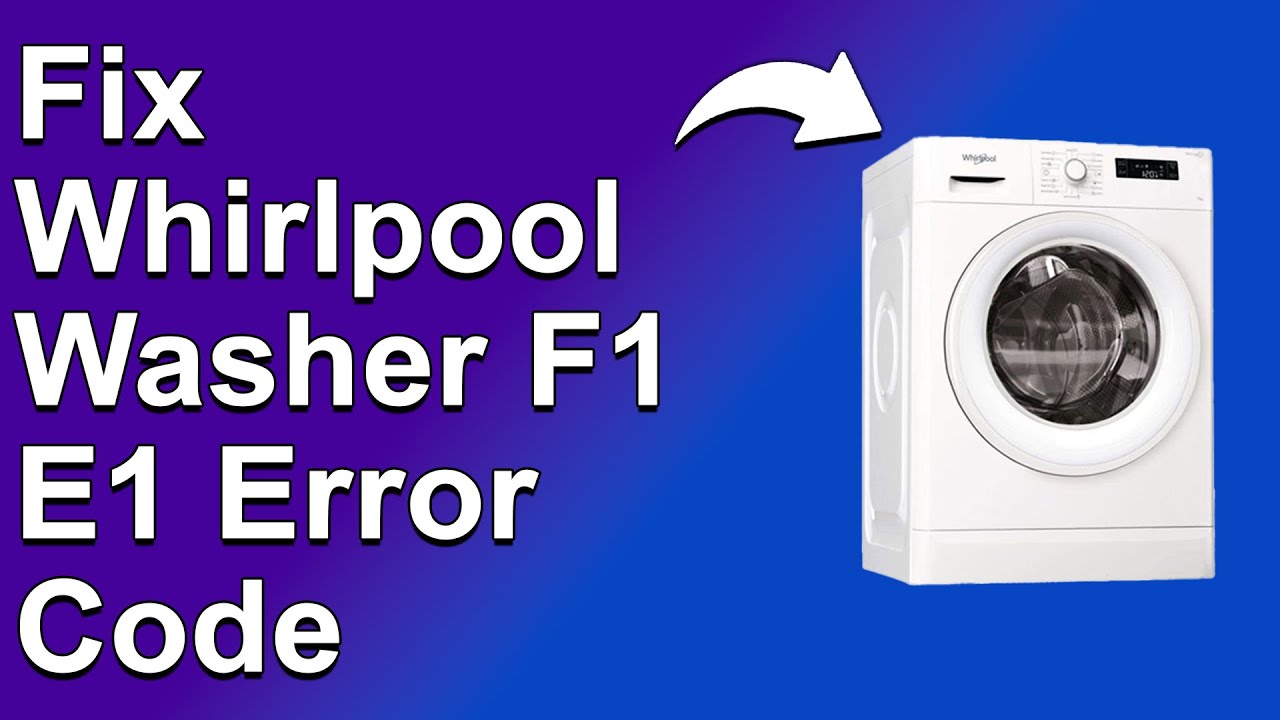
We understand how frustrating it can be when your Whirlpool washer suddenly displays the error code F1 E1. This code generally signifies a problem with the main control board, which is a crucial part of your washer that helps manage cycle timing and sensor signals.
Don’t worry; this is a common issue that many people experience, and there are often simple DIY solutions available.
One common cause of the F1 E1 error could be wiring issues, such as loose connections or damaged wires.
To get a complete understanding of this error and learn about other potential causes, we encourage you to read through the entire post.
By doing so, you’ll equip yourself with the knowledge you need to effectively troubleshoot and potentially resolve this issue on your own.
What Does the Error Code Mean?
When your Whirlpool washer displays the error code F1 E1, it indicates a problem with the main control board. This component is crucial because it manages various functions of your washer, such as cycle timing and sensor readings. When the control board detects an issue, it triggers this error code to notify you of a potential malfunction.
If you encounter this error, you may notice your washer stopping mid-cycle or, in some cases, failing to start entirely. It’s important to recognize this error code as a signal that further diagnostics are necessary. The main control board issue should be addressed promptly to prevent more significant complications down the line and ensure your washer operates efficiently once again.
To troubleshoot this issue, first, try unplugging the washer for a few minutes to reset the control board. If the error persists after plugging it back in, it may be time to consult a professional technician. Remember, dealing with electrical components can be risky, so if you’re unsure about any steps, it’s always safest to seek expert help. By understanding this error and taking the right steps, you can help restore your washer to proper working order.
Common Causes of the Error Code
Identifying Common Causes of the F1 E1 Error Code
Cause 1
If your Whirlpool washer shows the F1 E1 error code, it typically signals a communication failure between the control board and the user interface. Understanding this issue is crucial for getting your washer back in working order.
One of the most common culprits behind this error is a faulty control board. When the control board isn’t functioning correctly, it struggles to send or receive signals properly, resulting in the F1 E1 code.
Another potential cause to consider is an underlying electrical issue. Damaged wiring or poor connections can disrupt communication between the different components of your washer. To address this, take the time to carefully inspect all wiring and connectors for any signs of wear or damage.
Cause 2
When dealing with the F1 E1 error code, it’s important to consider several potential causes beyond just a faulty control board and electrical issues. In my 20 years of experience as an appliance repair technician, I’ve seen that understanding these common issues can greatly aid in troubleshooting. Here are some factors to examine:
- User Interface Controls: Sometimes the control panel can be the source of the problem. Look for any signs of damage or malfunction that may affect its operation.
- Wiring Connections: Inspect the wiring for any visible damage or disconnections. Poor connections can lead to communication errors within the appliance.
- Door Lock Mechanism: An inoperative door lock can trigger the F1 E1 error. Ensure it is functioning properly, as this is crucial for the appliance to operate safely.
- Connectors: Check for corroded or poorly connected connectors. Corrosion can lead to erratic behavior and communication failures.
- Software Glitches: Occasionally, issues can arise from the control board’s software. A reset may resolve minor glitches.
Cause 3
When tackling the F1 E1 error code, it’s essential to consider the most common reasons this issue arises. One primary factor to investigate is the connection between the main control board and other components. If these connections are loose or damaged, it can disrupt communication, leading to confusion in error code interpretation.
Another aspect to check is the presence of moisture or debris on the control board. Accumulation of these elements can create shorts or lead to component failures, complicating the washer’s operation.
Power supply issues are also a frequent cause; fluctuations or interruptions in power can impact the performance of the control board significantly. Lastly, inspect the wiring and connectors for any signs of damage, as compromised electrical pathways can hinder performance.
Cause 4
What other factors could be contributing to the F1 E1 error code? Understanding these common culprits can significantly aid in your troubleshooting efforts and help you ascertain whether a control board replacement is necessary. Here are some potential issues to consider:
- Loose or Damaged Wiring: Start by inspecting all wiring connections. Ensure they are secure and free from visible damage, as loose or frayed wires can lead to communication failures in your appliance.
- Faulty Sensors: The sensors play a crucial role in the operation of your washer. If any of these sensors are malfunctioning, they may incorrectly signal an issue, triggering the F1 E1 error code.
- Power Supply Issues: Check the power supply to your washer. Inconsistent voltage or fluctuations can disrupt the control board’s performance, leading to error codes. Consider using a multimeter to test the voltage at the outlet.
- Software Glitches: Sometimes, the issue may stem from a temporary software glitch. A simple reset of the appliance, by unplugging it for a few minutes and then plugging it back in, may resolve minor software-related problems.
- Environmental Factors: Be mindful of the environment where your washer is located. Excess moisture, extreme heat, or cold can adversely affect the control board and lead to errors. Ensure your washer is in a well-ventilated area and protected from harsh conditions.
Required Tools to Fix the Error
Preparing for the Repair Process
Basic Tools
When addressing the Whirlpool washer error code F1 E1, having the right tools at your disposal can significantly ease the repair process. With over 20 years of experience in appliance repair, I’ve seen firsthand how the right equipment can make troubleshooting more efficient and effective. The F1 E1 error typically indicates a fault with the main control board, and being prepared will help you tackle this issue confidently. Here’s a list of essential tools you’ll want to have on hand:
- Screwdriver Set: Make sure to include both flathead and Phillips screwdrivers. These are fundamental for removing and securing various components.
- Nut Driver or Socket Set: A nut driver or a socket set will help you access bolts and screws that hold the washer’s panels together.
- Multimeter: This tool is essential for electrical testing. It allows you to check for continuity and measure voltage, helping you diagnose electrical issues accurately.
- Pliers: A good pair of pliers will assist you in gripping, twisting, or bending wires as needed during repairs.
- Wire Strippers: If you encounter damaged wires, wire strippers will allow you to make safe and effective repairs.
Having these tools ready not only streamlines your repair process, but it also promotes safety and accuracy. Always remember to unplug your washer before starting any repair work to avoid electrical hazards. With the right preparation, you can confidently address the F1 E1 error and get your washer back in working order.
Supplies
When addressing the Whirlpool washer error code F1 E1, having the right supplies on hand is crucial for a successful repair. Let’s break down what you need to tackle this issue effectively and safely.
First, a multimeter is essential. This tool will allow you to test electrical components and confirm that they are functioning properly. Understanding how to use a multimeter can seem daunting, but it’s a straightforward process that can help you diagnose issues accurately.
Next, a good screwdriver set is necessary. You’ll need it to access the control board and other internal components. Make sure you have the right types of screwdrivers for your model, as using the wrong ones can damage screws or the appliance itself.
If your diagnosis indicates that the control board needs replacing, be sure to have the appropriate replacement parts ready. It’s always best to source parts that are compatible with your specific washer model to ensure a proper fit and function.
Additionally, having a water pressure gauge on hand is important. This tool will help you verify that the inlet water pressure meets the manufacturer’s specifications. Low water pressure can often trigger error codes like F1 E1, so it’s crucial to rule this out as a potential cause.
Lastly, don’t overlook the detergent dispenser. Clogs in this area can interfere with proper water flow, contributing to the error. Cleaning it regularly can prevent many common issues.
With these supplies and a methodical approach, you’ll be well-equipped to diagnose and resolve the F1 E1 error code. Remember, safety first—always unplug your washer before beginning any repair work. By empowering yourself with the right tools and knowledge, you can tackle this repair with confidence.
Pre-Safety Checklist Before Fixing
Before you embark on fixing your Whirlpool washer, it’s crucial to prioritize your safety and prevent any potential damage to the appliance. Here’s a straightforward pre-safety checklist to follow:
- Unplug the washer: Make sure it’s completely disconnected from the power source to eliminate the risk of electric shock. This is the most important step.
- Turn off the water supply: Shut off the valves leading to the washer. This will help prevent any water leaks while you conduct your repairs.
- Wear protective gear: Equip yourself with gloves and safety goggles. These will shield you from sharp edges and any debris that may be present.
- Gather your tools: Before you start, ensure you have all the necessary tools at hand. Common tools you might need include screwdrivers, a multimeter for electrical testing, and wrenches.
- Clear the workspace: Declutter the area around your washer. This will provide you with easy access to the appliance and allow for safe movement as you work.
Diagnose the Error Code
With safety precautions firmly in place, let’s tackle the F1 E1 error code you’re seeing on your Whirlpool washer. This code typically indicates an issue with the main control board, so understanding the error is crucial for effective troubleshooting.
Start by thoroughly inspecting the wiring connections to ensure they are secure and free from any damage. Look for any visible signs of burnt components on the main control board, as these can point to a malfunction that needs addressing.
Inspect wiring connections for security and damage, and check the main control board for any signs of burnt components.
Next, perform a power reset: unplug the washer from the wall for a few minutes, then plug it back in. This simple step can sometimes clear temporary glitches.
If the F1 E1 error code continues to appear, it may be time to dive deeper into main control troubleshooting. This process may involve testing the board and its components to determine if a replacement is necessary.
Step-by-Step DIY Troubleshooting Guide
Moving Forward: Addressing the F1 E1 Error
Fix for Cause 1
If you’ve encountered the Whirlpool washer error code F1 E1, it’s important to address the underlying issue to restore your washer’s functionality effectively. Let’s walk through some reliable diagnostic steps to help you pinpoint the problem safely:
- Unplug the Washer: Safety should always be your first priority. Disconnect the power to avoid any electrical hazards while you work on the appliance.
- Inspect Connections: Take a close look at the wiring connected to the control board. Check for any loose connections or signs of corrosion. A secure, clean connection is crucial for proper operation.
- Run a Diagnostic Test: Most Whirlpool washers come with a built-in diagnostic mode. This feature can help you identify any specific faults. Refer to your user manual for instructions on how to activate this mode.
- Check for Moisture: Examine the control board for any signs of water damage. Moisture can cause electrical components to fail, leading to error codes. If you find any water or corrosion, it may be necessary to address the source of the moisture before proceeding.
- Replace Faulty Components: If your diagnostic test or visual inspection reveals any defective parts, it’s time to replace them. Ensure you have the right replacement components and follow proper repair techniques to maintain safety and appliance integrity.
Fix for Cause 2
After addressing the main control board fault, it’s important to investigate additional potential causes of the F1 E1 error code. Start by examining the wiring harness connections between the control board and the various components of your washer. Loose or damaged wires can disrupt communication between these parts, which may trigger this error code.
Next, take a close look at the door lock assembly. A malfunctioning door lock can also activate the F1 E1 error. To check its functionality, use a multimeter to test for continuity in the lock. This step will help confirm whether the door lock is working properly.
If everything seems to be in order with the wiring and door lock, it’s crucial to check the machine’s grounding. A secure ground connection is vital, as poor grounding can lead to erratic behavior in your washer, potentially causing the error code to appear.
Fix for Cause 3
As you continue troubleshooting the F1 E1 error code, examining the control board connections is crucial for pinpointing the issue. This step is essential for accurate error code interpretation, as loose or corroded connections can disrupt the functionality of the main control board. Here’s a straightforward guide to ensure proper connections:
- Safety First: Always unplug the washer from the power source before starting any repairs to prevent electric shock.
- Access the Control Panel: Carefully remove the control panel to reach the connections. Make sure to take note of how it’s assembled so you can reassemble it easily later.
- Inspect Connections: Examine all wire harnesses for signs of damage or corrosion. Look for frayed wires or any discoloration that might indicate poor connections.
- Secure Loose Wires: If you find any loose wires, reconnect them securely. It’s important that all connections are snug to ensure proper electrical flow.
- Reassemble and Test: Once you’ve checked and secured everything, reassemble the control panel. Plug the washer back in and power it on to see if the F1 E1 error code still appears.
Following these steps can help you identify and resolve potential issues with the control board connections, leading to a smoother operation of your washer. If the error persists, it may be time to consult a professional technician for further diagnosis. Remember, safety and careful handling are key in appliance repair.
Fix for Cause 4
When you encounter the F1 E1 error code on your washer, it’s important to approach the situation methodically to ensure safety and effective resolution. Start by unplugging the washer from the power source to avoid any electrical hazards. Once it’s unplugged, take a moment to inspect the wiring harness connected to the main control board. Look for any loose or damaged connections; if you find any, make sure to reconnect the wires securely.
Next, examine the control board for signs of corrosion or burn marks, which can indicate a more serious issue. Using a multimeter, check the voltage across the control board to confirm it’s receiving the appropriate power. If all connections appear intact and the board is functioning properly, plug the washer back in and run a diagnostic cycle. Pay close attention to any unusual beeping or flashing lights during this process, as they can provide clues to the underlying issue.
If the F1 E1 error persists after following these steps, it may be time to consider replacing the main control board. Remember, troubleshooting can seem daunting, but by taking a systematic approach, you can effectively isolate the issue and make informed decisions about repairs. Always prioritize safety and don’t hesitate to consult a professional if you’re unsure about any steps.
Call a Professional If
If you’ve tried basic troubleshooting for the F1 E1 error on your Whirlpool washer and haven’t had any success, it may be time to consider calling in a professional. Some issues go beyond simple fixes and require the expertise of a trained technician. Here are some key indicators that it’s wise to seek professional help:
- The F1 E1 error continues to appear despite following all suggested troubleshooting steps.
- You observe any physical damage to the washer’s control board or other components.
- There are unusual sounds or smells that accompany the error code, which could indicate further issues.
- You don’t have the appropriate tools or the expertise needed to perform repairs safely.
- If your washer is still under warranty, professional services may be covered, saving you money.
It’s important not to ignore these signs, as doing so can lead to more extensive damage or increased repair costs down the line. Remember, reaching out for help is often the best way to ensure your washer operates safely and efficiently. Your appliance deserves the right care, and a professional can provide the reliable service it needs.