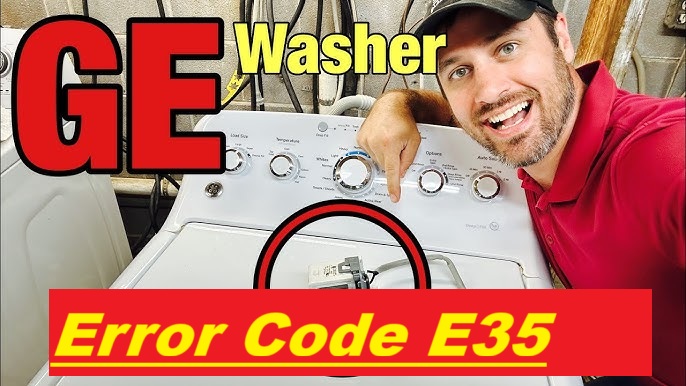
We understand how frustrating it can be when your GE washer displays the error code E35. This code indicates a water overflow issue, meaning your washer is detecting too much water inside.
Don’t worry—this is a common problem that many homeowners encounter, and there are often simple DIY solutions to fix it.
One frequent cause of the E35 error is a faulty pressure switch, which is responsible for monitoring the water level in your washer.
However, there could be other reasons for this error, and it’s important to address the issue before it worsens.
We encourage you to read through the entire post to uncover all the potential causes and their solutions.
With a little patience, you can get your washer back up and running smoothly!
What Does the Error Code Mean?
Have you come across the GE washer error code E35? This code signals an issue with water level detection, particularly concerning overflow detection. Essentially, when your washer detects that the water level is surpassing its maximum safe limit, it triggers the E35 error. This safety feature is crucial as it helps prevent potential flooding or damage to your home.
The pressure switch is responsible for monitoring the water level, ensuring it remains within safe parameters. If the pressure switch malfunctions or if there’s a problem with the water inlet valve, you may see the E35 error code.
Addressing this error swiftly is vital to prevent further complications. Here’s what you can do: First, inspect the pressure switch for any signs of damage or blockage. Make sure the hose connected to it is clear and properly attached. Next, check the water inlet valve for any issues that might be causing it to malfunction.
Common Causes of the Error Code
Identifying the E35 Error Code Causes
Cause 1
One common cause of the GE Washer Error Code E35 is a malfunctioning water level sensor. This sensor plays a vital role in monitoring the water level in your washer. If it fails, it can send incorrect signals to the control board, which may result in an overflow error. Another factor that can contribute to this issue is a clogged or defective drain valve. If the drain valve doesn’t open or close properly, water cannot exit the drum as it should, leading to an overflow.
To troubleshoot this issue effectively, start by inspecting the water level sensor for any signs of damage or debris that could be obstructing its operation. Make sure to clean it gently with a soft cloth if you notice any buildup. Next, check the drain valve to ensure it operates smoothly. You can do this by manually testing the valve to see if it opens and closes without resistance.
If you find any faults in these components, replacing or repairing them can help resolve the error and restore your washer’s functionality. Always remember to disconnect your washer from the power supply before performing any repairs to ensure your safety. By following these steps, you’re taking a proactive approach to maintaining your appliance and preventing future issues.
Cause 2
Another common cause of the GE Washer Error Code E35 is a malfunctioning pressure switch. The pressure switch is an essential component that measures the water level in your washer. If this switch fails, it may inaccurately sense the water level, potentially leading to overflow problems. When the sensor malfunctions, it can trigger the E35 error code, causing your washer to stop functioning.
To help you better understand how pressure switch issues can lead to the E35 error, here’s a straightforward reference table:
| Issue | Impact on Washer |
|---|---|
| Malfunctioning Pressure Switch | Incorrect water level detection |
| Sensor Malfunction | Triggers overflow error (E35) |
| Blocked Pressure Hose | Causes false pressure readings |
| Wiring Issues | Disrupts communication with the sensor |
If you encounter this error, it’s important to investigate these potential issues systematically. Remember, safety is paramount; always unplug your washer before attempting any repairs or inspections. If you’re uncertain about any step, consulting a professional technician is a wise choice.
Cause 3
A faulty water inlet valve can indeed lead to the GE Washer Error Code E35. This valve is responsible for regulating the flow of water into your washer. If it’s not functioning correctly, it may let in too much water, which can result in an overflow. When the water level surpasses the set limit, the washer’s sensors will pick up on this irregularity and display the error code.
Additionally, a clogged or malfunctioning drain pump can worsen the situation. If the drain pump fails to effectively remove the excess water, it could lead to a backup, ultimately causing an overflow.
To address these issues, start by inspecting both the water inlet valve and the drain pump for any blockages or signs of damage. Look for debris that may be obstructing the valve or pump, and check for any leaks or wear that could indicate a need for replacement.
Taking the time to resolve these components can help restore your washer’s normal operation and prevent future problems. Remember, safety first: always unplug your washer before attempting any repairs, and if you’re unsure, don’t hesitate to reach out to a professional technician.
Cause 4
When addressing the GE Washer Error Code E35, it’s important to consider the role of the pressure switch, a critical component responsible for monitoring the water level in the tub. If this switch is malfunctioning, it can lead to inaccurate readings, making the washer believe it is overfilled. Here are some common causes of this error that you should be aware of:
- Blocked Air Tube: The air tube connected to the pressure switch can become clogged or kinked, which may disrupt the pressure readings. Check to ensure that the tube is clear and free of obstructions.
- Damaged Pressure Switch: A physical defect in the pressure switch itself can cause it to fail. Look for signs of wear or damage, and consider replacing the switch if it appears faulty.
- Improper Installation: If the pressure switch was recently replaced or serviced, it’s possible that it was not installed correctly. Ensure that it is securely attached and properly aligned.
- Electrical Issues: Sometimes, the problem lies in the electrical connections to the pressure switch. Inspect the wiring for any frays or loose connections that could interrupt the signal.
Required Tools to Fix the Error
Preparing for Repairs: Essential Tools and Supplies
Basic Tools
Having the right tools is crucial when you’re tackling the GE washer error code E35. As someone who’s been in the appliance repair field for over 20 years, I can assure you that being well-equipped not only makes the troubleshooting process easier but also ensures your safety and the longevity of your washer. Here’s a list of the essential tools you’ll need for this repair:
- Screwdriver Set: A good set with both flathead and Phillips screwdrivers will help you remove panels and secure any loose components. Make sure to have various sizes to accommodate different screws.
- Multimeter: This tool is invaluable for checking electrical continuity and diagnosing potential issues. It allows you to test various components for faults, ensuring you can pinpoint the problem effectively.
- Adjustable Wrench: This is essential for tightening or loosening hoses and fittings. It provides the versatility needed for different sizes of nuts and bolts you may encounter during the repair.
- Towels: Always have a few towels on hand to manage any water spills. This not only keeps your workspace tidy but also helps prevent slips and falls.
Equipping yourself with these tools will streamline your troubleshooting process and enable you to address the E35 error code with confidence. Remember, having the right gear is a fundamental step in effective washer maintenance and repair. Always prioritize safety and take your time to ensure each step is executed properly.
Supplies
To address the GE washer error code E35 effectively, it’s essential to gather the right supplies to ensure a successful repair. Here’s a step-by-step guide to help you through the process safely and efficiently.
First, you’ll need replacement supply hoses. Inspect your current hoses for any signs of wear or damage, as these can cause improper water pressure, leading to the E35 error code. Be sure to select hoses that are compatible with your specific washer model to ensure optimal performance and prevent further issues down the line.
Next, having a pressure gauge ready is crucial. This tool will help you measure the water pressure in your home, allowing you to determine whether the problem originates from your water supply or the washer itself. Proper water pressure is vital for the washer’s operation, so this step is key to troubleshooting.
Additionally, gather a bucket to catch any excess water that may escape during your repairs. It’s also wise to have some towels on hand to manage any spills, keeping your workspace clean and safe.
With these supplies prepared, you’ll be well-equipped to diagnose and resolve the water overflow issue effectively. Remember, taking the time to ensure you have the right tools and materials will not only help you restore your washer’s functionality but also keep you safe during the repair process. Always prioritize safety and don’t hesitate to consult your washer’s manual for model-specific guidance.
Pre-Safety Checklist Before Fixing
Before you tackle the GE Washer error code E35, prioritizing your safety and ensuring the appliance is ready for maintenance is crucial. Here are some essential safety precautions to follow:
- Unplug the Appliance: Always disconnect the washer from the power source before starting any repairs. This will help prevent electrical shock and keep you safe during the troubleshooting process.
- Inspect for Water Leaks: Take a moment to check the area around the washer for any signs of water leaks. Standing water can create slip hazards and complicate your repair efforts.
- Wear Protective Gear: Equip yourself with gloves and safety goggles. These items will shield you from sharp edges and any debris that may be present while you work on the machine.
- Clear the Workspace: Ensure that the area surrounding the washer is tidy and free from clutter. A clean workspace reduces the risk of accidents and allows you to focus on the task at hand.
Diagnose the Error Code
To effectively diagnose the GE Washer error code E35, it’s important to understand what this code signifies. The E35 error typically indicates a problem with the water level sensor. This could be due to the sensor malfunctioning, wiring issues, or even blockages affecting its operation. Let’s break down the steps to help you resolve this issue safely and effectively.
First, perform a sensor diagnostic to assess the water level sensor’s functionality. This can involve checking for any visible signs of wear or damage, as well as ensuring that it is properly connected.
Here’s a helpful table that outlines potential causes of the E35 error and the necessary actions you can take:
| Issue | Possible Cause | Action Required |
|---|---|---|
| Incorrect Water Level | Faulty Water Level Sensor | Inspect and Test Sensor |
| Wiring Issues | Damaged or Loose Wiring | Check Connections for Damage |
| Blockage | Clogged Hose | Clear the Hose of Debris |
| Control Board Failure | Malfunctioning Control Board | Replace the Control Board if Needed |
Step-by-Step DIY Troubleshooting Guide
Moving Forward: Step-by-Step Troubleshooting for E35 Error Code
Fix for Cause 1
Since you’ve encountered the E35 error code on your GE washer, it’s essential to address the underlying issue thoroughly. One common culprit for this error is a malfunctioning water level sensor. Here’s a step-by-step guide to help you troubleshoot effectively:
- Unplug the Washer: Your safety is paramount. Always start by disconnecting the washer from the power source to prevent any electrical hazards.
- Locate the Water Level Sensor: This component is typically found near the bottom of the washer tub. Refer to your user manual for specific locations and diagrams if needed.
- Inspect for Damage: Examine the sensor for any visible signs of damage, such as cracks or corrosion, and ensure that all connections are secure. Loose or damaged wires can often lead to sensor malfunctions.
- Clean the Sensor Area: Sometimes, debris or mineral buildup can interfere with the sensor’s operation. Gently clean around the sensor with a soft cloth to remove any obstructions.
- Test the Sensor: Using a multimeter, check the continuity of the sensor. Set the multimeter to the resistance (ohms) setting and place the probes on the sensor terminals. A reading of zero or close to zero indicates that the sensor is functioning properly. If there is no continuity, it’s time to consider replacing the sensor.
Fix for Cause 2
If you’ve ruled out the water level sensor as the cause of the E35 error code on your GE washer, the next step is to examine the pressure switch and its connected hoses. First, for your safety, unplug the washer before you start any inspection.
Begin by inspecting the pressure switch itself. Look for any visible signs of damage, such as cracks or corrosion, that could affect its functionality. Next, turn your attention to the hoses connected to the pressure switch. Check for any blockages, kinks, or wear that might impede water flow. It’s crucial that these hoses are securely attached and free from leaks; even a minor issue could lead to incorrect pressure readings and trigger the E35 error.
If you discover any blockages, take the time to clear them out thoroughly. After completing your inspection and ensuring everything is properly reconnected, plug the washer back in and run a test cycle. This process will help you determine if the pressure switch is operating correctly, and ideally, resolve the E35 error.
Fix for Cause 3
When you encounter the E35 error code on your GE washer, it’s essential to address the underlying issues related to the drain pump and its components. A malfunctioning drain pump can hinder proper drainage, leading to incorrect water levels and the triggering of this error. Here’s a step-by-step guide to troubleshoot the issue safely:
- Inspect the drain pump for clogs: Begin by disconnecting the washer from the power source. Remove the drain pump cover and check for any debris or foreign objects that may be obstructing the pump. Clear any blockages you find.
- Check the pump’s wiring: Carefully examine the wiring connections to the drain pump. Look for any signs of wear, fraying, or loose connections. Ensure that all connections are secure and intact to avoid electrical issues.
- Test the water level sensor: A faulty water level sensor can mistakenly signal an overflow condition, prompting the E35 error. If you have a multimeter, you can test the sensor for continuity according to the manufacturer’s specifications.
- Run a diagnostic cycle: Many modern GE washers have a built-in diagnostic mode. Refer to your user manual for instructions on how to initiate this cycle. It will help determine if the drain pump is functioning correctly and can provide additional error codes for further troubleshooting.
Fix for Cause 4
To effectively address the E35 error code, it’s essential to closely examine the pressure switch and its associated components, which are vital for maintaining proper water levels in your washer. Safety is paramount, so start by unplugging the washer from the power source.
Next, locate the pressure switch; it’s usually found near the top of the tub. Inspect the pressure hose connected to the switch for any obstructions or damage. If you discover that the hose is clogged, carefully clear it to ensure proper airflow.
Once you’ve checked the hose, it’s important to test the overflow sensor for continuity using a multimeter. If the sensor is not functioning correctly, it will need to be replaced. Additionally, ensure that any loose wiring connected to the pressure switch is securely reattached.
After completing these steps, plug the washer back in and run a cycle. This will help you confirm that the water level regulation is working properly and that the E35 error code is resolved. By following these guidelines, you can confidently troubleshoot this common issue and ensure your washer operates smoothly.
Call a Professional If
While it may be tempting to tackle the GE washer error code E35 on your own, there are specific situations where it’s wise to reach out to a professional. Getting expert help can not only save you valuable time but also help prevent additional damage to your appliance. Here are some scenarios to consider:
- Safety Concerns: If you’re uncertain about how to safely diagnose or repair the issue, it’s best to consult a professional. Your safety should always come first.
- Persistent Issues: If the error code continues to appear despite your best efforts to resolve it, a technician can provide a thorough diagnosis and effective solutions.
- Unusual Sounds or Leaks: If you hear strange noises or notice any leaks during operation, these can be signs of more serious problems that require professional attention.
- Warranty Considerations: If your appliance is still under warranty, attempting DIY repairs may void that coverage. A certified technician can ensure that any necessary repairs are performed without jeopardizing your warranty.
In these situations, a skilled technician can accurately pinpoint the underlying issue and provide reliable fixes, ensuring your washer runs safely and efficiently for years to come. Remember, sometimes the best course of action is to seek help from an expert.