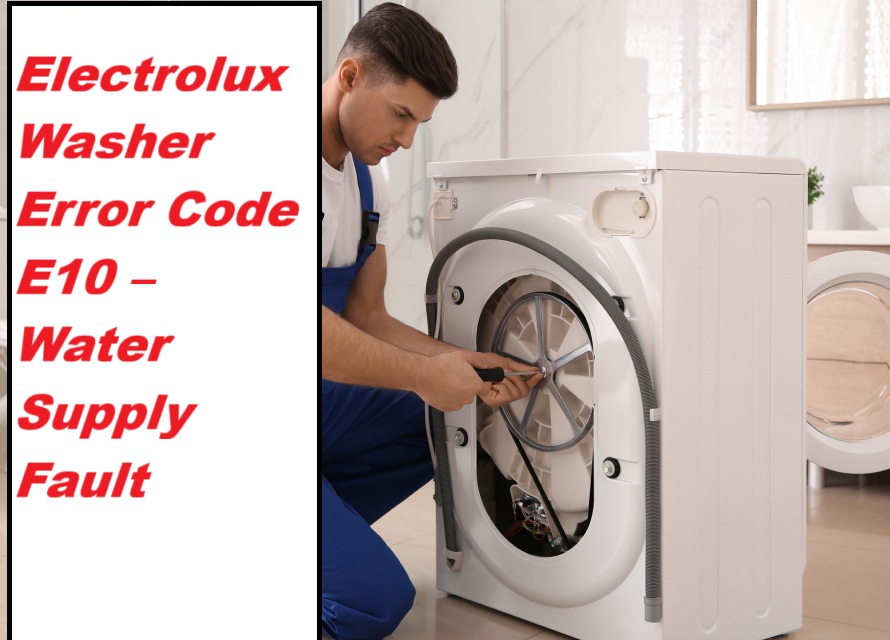
We understand how frustrating it can be when your Electrolux washer suddenly displays error code E10. This specific code indicates a water supply fault, which means that the machine is having trouble getting the water it needs to run properly.
This is a common issue that many people encounter, and the good news is that there are often simple DIY solutions to fix it.
One common cause of the E10 error is a clogged filter, which can prevent water from flowing into the washer.
But don’t worry, we’ll guide you through all the possible causes and solutions.
To get a comprehensive understanding of this error and how to resolve it, we encourage you to read through the entire post.
With a little patience and some handy tips, you’ll be back to washing in no time!
What Does the Error Code Means?
When your Electrolux washer displays the error code E10, it signifies a problem related to water filling. Specifically, this code indicates that the machine is not receiving an adequate supply of water during its wash cycle. Addressing this issue promptly is essential to prevent further complications and ensure your washer operates efficiently.
To help you troubleshoot the E10 error effectively, here are some actionable steps:
- Check Water Supply Valves: Start by verifying that the water supply valves are fully open. If they’re partially closed, your washer may not be getting enough water.
- Inspect Inlet Hoses: Look at the inlet hoses connected to your washer. Ensure they are not kinked or blocked, which can restrict water flow.
- Clean Filter Screens: It’s important to check the filter screens located inside the inlet valves for any debris or buildup. If they’re clogged, clean them thoroughly to restore proper water flow.
- Test Water Inlet Valve: If the above steps do not resolve the issue, you may need to test the water inlet valve itself. This valve controls the water entering your washer, and if it’s malfunctioning, it may need to be replaced. Additionally, a malfunctioning drain pump can block water removal, leading to similar error codes.
Common Causes Behind Error Code
Troubleshooting Error Code E10: Key Issues to Address
GE washer error code E23 also highlights the significance of water supply issues that can affect the overall functionality of washing machines.
Clogged Inlet Filter
A clogged inlet filter often causes the Electrolux washer error code E10, which indicates issues with water supply. This can significantly impact your washer’s performance, leading to inefficient washing and potential damage over time. Regular maintenance of your inlet filter is crucial to prevent these problems. Below is a comprehensive reference table to help you identify potential causes of a clogged inlet filter and the corresponding solutions:
| Cause | Symptoms | Solution |
|---|---|---|
| Debris Buildup | Slow water fill | Remove and clean the filter |
| Hard Water Deposits | Reduced water pressure | Soak the filter in vinegar |
| Incorrect Installation | Unstable water supply | Reinstall the filter properly |
| Aging Components | Frequent occurrence of error code E10 | Replace the filter with a new one |
To maintain optimal performance of your washer, regularly inspect and clean the inlet filter. This simple maintenance step can save you from potential headaches and costly repairs down the line. Remember, safety first—always unplug your washer before performing any maintenance tasks. If you’re unsure or uncomfortable with any of these steps, it’s best to consult with a professional technician. Additionally, using HE detergent can help prevent excessive suds buildup that might complicate water supply issues.
Faulty Water Inlet Valve
Faulty water inlet valves are a prevalent issue that can trigger the Electrolux washer error code E10. These valves are responsible for regulating the flow of water into your washer, and when they malfunction, it can lead to improper operation of the machine. A water inlet valve may fail due to various reasons, such as wear and tear over time, electrical malfunctions, or corrosion, which can all impede the water supply necessary for your washer to function effectively.
To avoid these issues, it’s essential to perform regular maintenance on your water inlet valves. Inspect them for any signs of damage, such as leaks or blockages, and replace any faulty valves without delay to ensure your washer operates smoothly and efficiently. If you suspect a problem with the water inlet valve, you can test it using a multimeter. This tool will help you determine whether the valve is functioning properly or if it needs replacement. Additionally, ensure that the water supply line pressure is sufficient to avoid issues with the valve’s operation.
Addressing any issues with the water inlet valve as soon as they arise can save you from more significant complications down the line. By taking these proactive steps, you can help maintain the peak performance of your Electrolux washer and prolong its lifespan. Remember, keeping your appliances in top shape not only enhances their efficiency but also ensures your laundry routine remains hassle-free.
Low Water Pressure
Low water pressure is a common issue that can trigger the Electrolux washer error code E10, making it essential to identify the typical causes. One of the main culprits behind low water pressure is supply issues. This can occur due to clogged filters or kinks in the hoses connected to your washer. If your home’s water supply is not delivering sufficient pressure, it will directly affect your washer’s ability to function properly.
Furthermore, if you share plumbing systems with other fixtures, such as sinks or showers, you may notice a decrease in water pressure when multiple appliances are in use at the same time. Seasonal changes or municipal maintenance work can also lead to fluctuations in water pressure, so it’s wise to stay informed about local conditions that might impact your supply. To ensure a steady flow of water and prevent the E10 error from affecting your laundry routine, regularly inspect your supply lines for any blockages or damage. Cleaning out any debris and checking for kinks in the hoses can help maintain optimal water flow. A malfunctioning fill valve can also contribute to low water pressure issues. By taking these simple steps, you can keep your washer running smoothly and avoid interruptions in your laundry tasks.
Faulty Hose Connection
Water supply issues in your Electrolux washer can often stem from faulty hose connections, which may trigger the E10 error code. To begin troubleshooting, it’s essential to conduct a thorough inspection of the connections. First, ensure that the hoses are securely attached to both the washer and the water supply.
Next, examine the hoses for any signs of wear, kinks, or damage that could restrict water flow. These issues can sometimes go unnoticed but can significantly impact the washer’s performance. Also, don’t forget to check the inlet screens—these are located at the points where the hoses connect to the washer. If they’re clogged with debris, they can obstruct water flow and lead to the E10 error.
Regular maintenance of your hoses is crucial for preventing future issues. If you notice any signs of deterioration, such as cracks or bulges, it’s wise to replace the hoses immediately. This small preventive measure can save you from larger problems down the line. Additionally, keeping the drain pump functionality in check will help maintain optimal water flow and prevent similar errors.
If you’ve confirmed that everything appears intact but the E10 error persists, it may be time to consult a professional. They can provide a more in-depth diagnosis to identify any underlying issues that could be affecting your washer.
Addressing these water supply concerns promptly not only resolves the immediate error but also helps you avoid further complications in the future. Remember, taking proactive steps in maintaining your appliances can lead to a longer lifespan and better performance.
Required Tools to Fix the Error
Essential Tools for Troubleshooting
Having the right tools can significantly streamline the troubleshooting process, especially when dealing with issues like a drainage issue that can lead to error codes.
Basic Tools
When facing the Electrolux washer error code E10, having the right tools at your disposal is crucial for a successful repair. Proper maintenance not only saves you time but also ensures your washer operates efficiently. Below is a list of essential tools you’ll need to tackle this issue:
| Tool | Purpose |
|---|---|
| Screwdriver | To remove panel screws |
| Pliers | For gripping and manipulating hoses |
| Adjustable Wrench | To tighten or loosen fittings |
| Bucket | To catch any water spills |
| Towels | For cleaning up any mess |
Equipping yourself with these basic tools prepares you to diagnose and address the water supply fault effectively. Remember, gathering your tools before starting your repair will lead to a smoother and safer process. Always prioritize safety when working on your appliance, and if you’re ever unsure about a step, don’t hesitate to consult a professional. Additionally, ensure that your power supply is stable to avoid further issues, as an unstable power supply can lead to operational errors like E10. Your washer deserves the best care, and with the right approach, you can provide it.
Supplies
Having the right supplies is crucial for effectively resolving the E10 error on your Electrolux washer. Let’s ensure you’re well-prepared for the task. Start by gathering essential tools and materials:
- Multimeter: This handy tool will help you check electrical components to diagnose any issues accurately.
- Bucket: Use a bucket to drain any excess water, making the repair process much cleaner and safer.
- Screwdrivers: A set of screwdrivers is necessary for accessing the internal parts of your washer. Make sure you have both flathead and Phillips screwdrivers on hand.
- Replacement Hoses: Often, a damaged water supply line can trigger the E10 error code. Having replacement hoses ready will save you time and ensure a proper fix.
- Towels: Keep some towels nearby for any spills that might occur during the repair process. It’s always good to be prepared.
- Small Brush: If your washer has a clogged filter, a small brush can help you effectively remove debris and keep everything running smoothly. Additionally, checking the water supply line is essential to ensure that the E10 error is not caused by a blockage.
Pre-Safety Checklist Before Fixing
Before you get started with repairs on your Electrolux washer, it’s essential to prioritize your safety and ensure the machine is functioning correctly. Following a thorough pre-safety checklist can help prevent accidents and facilitate effective repairs. Here are some key safety precautions to keep in mind:
- Unplug the Washer: Always disconnect the power supply by unplugging the washer. This step is crucial to prevent any risk of electrical shock while you work.
- Check Water Supply: Make sure to turn off the water supply valves and disconnect the hoses. This prevents any unexpected leaks or water flow during your repair process.
- Wear Protective Gear: Equip yourself with gloves and safety goggles. These items are important to shield you from potential injuries, especially when handling tools or sharp components. Additionally, ensure that you have followed a pre-safety checklist to minimize risks during the repair process.
Diagnose the Error Code
To effectively diagnose the E10 error code on your Electrolux washer, it’s important to understand that this code indicates a water supply fault. This issue is often linked to the water inlet system. Below is a comprehensive table that outlines common causes of the E10 error and the necessary actions to resolve them:
| Possible Cause | Action Required |
|---|---|
| Clogged inlet filter | Carefully clean or replace the filter. Make sure to turn off the water supply before attempting this. |
| Kinked inlet hose | Inspect the hose for any bends or twists and straighten it out to ensure proper water flow. |
| Closed water valve | Verify that the water valve is fully open. If it’s closed, open it to restore water supply. |
| Low water pressure | Check your home’s water pressure. If it’s below 20 PSI, you may need to consult a plumber. |
| Faulty water inlet valve | Test the valve for functionality. If it’s not working properly, consider replacing it to restore normal operation. |
Step-by-Step DIY Troubleshooting Guide
Next Steps for E10 Error Resolution
Clean Inlet Filter Thoroughly
A clogged inlet filter can trigger the E10 error code on your Electrolux washer, making it crucial to keep this component clean. Here’s a step-by-step guide to help you through the process safely and effectively.
- Unplug the Washer: Safety should always come first. Start by unplugging your washer from the electrical outlet to prevent any accidental starts during maintenance.
- Shut Off the Water Supply: Locate the valves for the water supply and turn them off. This will prevent any leaks while you’re working on the inlet filter.
- Locate the Inlet Filter: The inlet filter is typically situated at the connection point where the water hoses attach to your washer.
- Remove the Hoses: Carefully unscrew the hoses from the back of the machine. You may want to have a small towel or bucket handy to catch any residual water that may spill out.
- Extract the Filter: Once the hoses are removed, gently pull out the inlet filter. Be cautious, as it may have accumulated debris.
- Inspect the Filter: Check the filter for any detergent residue, sediment, or other buildup that could hinder water flow. This is a common issue that can lead to the E10 error code.
- Clean the Filter: Rinse the filter under warm running water. For more stubborn debris, use a soft brush, like an old toothbrush, to gently scrub away any grime. Ensure that all residues are removed to allow for proper water flow.
- Reinsert the Filter: Once the filter is clean and dry, carefully place it back into its original position.
- Reconnect the Hoses: Securely attach the water hoses back to the washer. Make sure they’re tightly connected to prevent leaks.
- Restore Water Supply: Turn the water supply back on and check for any leaks at the connection points.
- Plug in the Washer: Finally, plug the washer back into the electrical outlet.
After completing these steps, run a short cycle to see if the E10 error code has cleared. If the error persists, there may be other underlying issues, and it may be time to consult a professional technician for further diagnosis. Remember, regular maintenance of your washer, including cleaning the inlet filter, can help prevent future problems and ensure your machine operates smoothly.
Replace Water Inlet Valve
When your Electrolux washer displays the E10 error code, and you’ve already cleaned the inlet filter, it may indicate a problem with the water inlet valve. Don’t worry; replacing this component is a manageable task that you can handle with care.
First and foremost, safety is paramount. Begin by unplugging the washer to eliminate any risk of electric shock. Next, turn off the water supply to the machine. The water inlet valve is typically located at the back of the washer, so you’ll need to access it from there.
Once you’re at the back, carefully disconnect the inlet hoses. Be prepared for some residual water to spill out, so have a towel handy. After the hoses are detached, look for the screws that secure the valve in place and remove them. Gently pull the valve away from the washer, taking note of how the wiring is connected for later.
Now it’s time to install the new water inlet valve. Reverse the process you just completed: connect the wiring to the new valve as it was on the old one, secure the valve with screws, and reattach the inlet hoses. Ensure everything is tight to prevent leaks.
After you’ve completed the installation, restore the water supply and plug the washer back in. It’s a good idea to run a test cycle to verify that the E10 error code has been resolved. If the error persists, it may be necessary to delve deeper into troubleshooting to identify any other underlying issues.
Inspect Hose for Kinks
Before tackling more intricate repairs on your Electrolux washer, it’s essential to conduct a thorough inspection of the hoses connected to your machine. Checking for kinks or blockages in these hoses can save you a considerable amount of time and frustration down the line. Here’s a step-by-step guide to help you effectively prevent kinks:
| Step | Action |
|---|---|
| 1 | Turn off the water supply to avoid any leaks. |
| 2 | Locate the inlet hoses at the back of the washer. |
| 3 | Carefully examine the hoses for any kinks, bends, or twists that may restrict water flow. |
| 4 | If you find any kinks, gently straighten them out to restore proper water flow. |
| 5 | Reconnect the hoses securely if you had to detach them for inspection. |
As you perform this inspection, also keep an eye out for any signs of wear, such as cracks or fraying, which could indicate that the hoses may need replacement. If you continue to experience issues with your washer after this inspection, it may be time to delve into further troubleshooting or consult with a professional. Always prioritize your safety and the longevity of your appliance by addressing these issues promptly.
Check Hose Connection Integrity
Ensuring that your washer’s hose connections are secure is crucial for preventing leaks and maintaining optimal performance. Here’s a step-by-step guide to help you check the integrity of your Electrolux washer’s hose connections safely and effectively.
- Turn Off the Water Supply: Before you begin, it’s essential to turn off the water supply to your washer. This will help prevent any accidental leaks while you inspect the hoses.
- Inspect Hose Connections: Start by checking the water supply hoses connected to the back of your washer and the wall. Look for any visible signs of looseness. Each connection should feel snug; if you notice any that are loose, it’s time to tighten them.
- Tightening Connections: If you find loose connections, you can tighten them by hand. If they still feel loose after that, you may use pliers for a firmer grip. However, be cautious not to over-tighten, as this can damage the fittings or the hoses themselves.
- Examine the Hoses: While you’re at it, take a close look at the hoses themselves. Check for any cracks, bulges, or signs of wear and tear. Damaged hoses can lead to leaks and should be replaced immediately to ensure safe operation.
- Test the Connections: Once you’ve secured all connections and verified that the hoses are in good condition, turn the water supply back on. Then, run a test cycle on your washer to make sure everything is functioning correctly and that any error codes, such as E10, are resolved.
Call a Professional If
If you’ve attempted to troubleshoot the E10 error code on your Electrolux washer but haven’t found a solution, it may be time to call a professional. Continuing to use your washer while ignoring persistent issues can lead to more significant problems down the line, potentially affecting your warranty. A qualified technician can accurately diagnose the issue and perform the necessary repairs to get your washer back in working order.
Signs to Call a Professional
- Error Persists After Troubleshooting: If the E10 error code keeps reappearing, it’s a clear indication that the issue requires expert attention.
- Unusual Noises During Operation: Strange sounds can signal mechanical problems that should be addressed promptly to prevent further damage.
- Water Supply Issues Remain: Persistent issues with water supply can be complex and might require a professional’s insight to resolve effectively.
- Electrical Issues Detected: Any signs of electrical problems should be taken seriously; a technician can safely diagnose and repair these issues.
Benefits of Professional Repair
- Expert Diagnosis: Professionals have the training and experience to identify the root cause of your washer’s issues, ensuring that all underlying problems are addressed.
- Time-Saving: Hiring a professional can save you time and frustration, allowing you to focus on other important tasks.
- Long-Term Solutions: A qualified technician can offer reliable solutions that not only fix the immediate problem but also prevent future issues.
- Quality Parts Used: Professionals typically use high-quality, manufacturer-approved parts, ensuring the longevity of your repair.
Warranty Considerations
- Check Warranty Status: Before proceeding with any repairs, it’s wise to check your warranty status to understand what repairs are covered.
- Avoid Voiding Warranty: Attempting to fix the washer yourself could void your warranty. Using authorized service ensures your warranty remains intact.
- Preserve Warranty Rights: Having a professional handle repairs can protect your rights under the warranty, giving you peace of mind.
Don’t hesitate to reach out for expert assistance when needed. Ensuring your washer functions efficiently not only saves you money in the long run but also helps protect your investment.