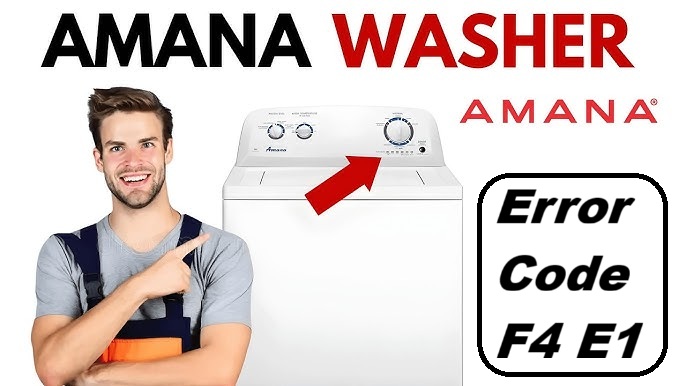
Dealing with your Amana washer’s F4 E1 error code can be incredibly frustrating, especially when it interrupts your laundry routine.
This code typically indicates that there’s a problem with the door lock mechanism, which means your washer can’t proceed with filling water.
Don’t worry; this is a common issue that many homeowners face, and there are often straightforward DIY solutions.
One common cause of the F4 E1 error is a water supply issue, such as a kinked hose or a blocked filter.
It’s important to understand that this is something you can often fix on your own.
To get a comprehensive understanding of this error and explore all potential causes and solutions, be sure to read through the entire post.
We’ll guide you through the steps to get your washer back in working order, so you can tackle that laundry pile with ease!
What Does the Error Code Means?
The Amana washer error code F4 E1 signifies an issue with the door lock mechanism. This code indicates that your washer is unable to confirm that the door is properly secured. Let’s walk through some troubleshooting steps to help you address this problem safely and effectively.
First, take a close look at the door latch. Check for any obstructions, such as foreign objects or debris, and ensure that it isn’t damaged. A faulty latch can prevent the door from locking properly. If the latch appears to be in good condition, the next step is to inspect the wiring connected to the door lock. Look for any loose, frayed, or damaged wires that could be interrupting the connection.
Another helpful tip is to reset the machine. You can do this by unplugging the washer from the electrical outlet for a few minutes. This can sometimes clear minor electronic glitches that may be contributing to the error. Additionally, ensure that the water supply line pressure is sufficient, as low pressure can also lead to fill issues.
After you’ve checked the door latch and wiring, plug the washer back in and try running a cycle again. If the F4 E1 error code continues to appear, it might be time to consider seeking professional assistance. In some cases, replacing the door lock mechanism may be necessary to resolve the issue.
Common Causes Behind Error Code
Identifying Common Causes of F4 E1 Error Code. A malfunctioning water inlet valve may contribute to the low water pressure issue affecting the washer’s filling process.
Clogged Cold Water Inlet
If you’re experiencing the F4 E1 error code on your Amana washer, a clogged cold water inlet could be the source of the problem. This situation typically occurs due to sediment buildup or debris in the inlet valve screen, leading to restricted cold water pressure.
To effectively address this issue, it’s important to perform routine maintenance on the inlet valve. Begin by turning off the water supply and disconnecting the hoses from the back of your washer. Carefully examine the inlet screens for any signs of blockage. If you notice any debris, clean the screens thoroughly or replace them if necessary. Additionally, ensure that the water supply is fully open to maintain optimal cold water pressure. Regularly checking water inlet valves can help prevent this issue in the future.
Faulty Water Inlet Valve
A faulty water inlet valve can trigger the F4 E1 error code on your Amana washer, which is an issue worth addressing promptly. This valve is responsible for controlling the flow of water into your machine, and any malfunction can prevent cold water from filling properly. Common problems with water inlet valves include electrical issues, sediment buildup, or general wear and tear over time.
To ensure your washer operates smoothly, regular maintenance of the valve is essential. Start by inspecting it for any visible signs of damage, such as cracks or corrosion. It’s also important to check that the electrical connections are secure and free from corrosion. If you notice leaks or if the valve fails to open during a wash cycle, it may be time for a replacement.
Addressing these concerns quickly can restore proper water flow and eliminate the F4 E1 error code, ensuring your washer runs efficiently. Additionally, it is important to use HE detergent when washing to prevent potential suds buildup that could also affect performance. Remember, safety first—always unplug your washer before performing any maintenance. By staying proactive, you can keep your appliance in top shape and avoid more costly repairs down the line.
Faulty Pressure Switch
The pressure switch is a critical component in your Amana washer, responsible for monitoring the water level inside the drum. When this switch malfunctions, it can trigger the F4 E1 error code, indicating a problem that needs your attention.
Common issues with the pressure switch include misalignment or physical damage, which can disrupt its ability to accurately read the water level. To begin troubleshooting, I recommend conducting a thorough pressure switch test to confirm that it’s functioning as intended.
Next, inspect the pressure tube for any blockages, as obstructions can also lead to incorrect water level readings. If you find that the switch is misaligned, carefully adjust it to ensure it operates correctly. Keep in mind that a faulty pressure switch can result in inconsistent water filling cycles, which may affect your washing performance. Addressing these issues promptly is crucial for maintaining efficient operation. Additionally, regular maintenance can help prevent future problems with the pressure switch and enhance the overall longevity of your washer.
Always prioritize safety when working on your appliances, and don’t hesitate to seek professional help if you’re unsure about any step in the process. Remember, a faulty water level sensor can also lead to similar error codes and operational issues.
Defective Water Supply Hose
One of the most common culprits behind the F4 E1 error code is a defective water supply hose. If this hose isn’t installed correctly, it may kink or become blocked, which can prevent cold water from flowing into your washer. To avoid this issue, ensure that the hose is straight and securely connected to both the washer and the water supply during installation.
Regular maintenance of your water supply hose is crucial. Take a moment to inspect it for any signs of leaks, cracks, or bulges, as these can indicate wear and tear. If you discover any damage, it’s important to replace the hose right away to prevent further complications. Additionally, make sure that the water supply valves are fully open. Addressing these potential issues can help you resolve the F4 E1 error and restore your Amana washer to proper working order. Remember, taking these steps not only ensures your washer functions effectively but also promotes a safe and efficient laundry experience. Furthermore, keeping appliances in good working order can prevent drainage issues and enhance their longevity and efficiency.
Required Tools to Fix the Error
Essential Tools for Repairing the F4 E1 Error
To effectively troubleshoot and repair the F4 E1 error code, it’s important to have the right tools on hand for the job. Additionally, using a multimeter to check electrical connections can be crucial in diagnosing any underlying issues that may affect the washer’s performance.
Basic Tools
Gathering the right tools is crucial for effectively addressing the Amana washer error code F4 E1. Having the appropriate maintenance equipment will help you troubleshoot and resolve the issue efficiently. Below is a list of essential tools that every homeowner should have on hand:
- Screwdriver Set – A good quality screwdriver set is vital for removing and securing the access panels on your washer. Make sure you have both Phillips and flathead screwdrivers.
- Wrench Set – A set of wrenches will be necessary for loosening and tightening the water supply fittings. It’s best to have both adjustable and fixed wrenches for versatility.
- Multimeter – This tool is essential for testing electrical connections and components. A multimeter will help you diagnose any electrical issues that may be contributing to the error code, such as faulty signals from the control board.
- Bucket – Keep a bucket handy to catch any water that may spill during the repair process. This will help you maintain a clean and safe working environment.
Having these tools ready not only simplifies your repair efforts but also ensures that you’re well-equipped to address any related issues that may arise, ultimately enhancing your washer’s performance and reliability. Remember, safety first—always unplug your appliance before starting any repairs.
Supplies
When addressing the Amana washer error code F4 E1, having the right tools and supplies can significantly streamline the repair process. Ensuring proper water supply to your washer is essential, so let’s gather the necessary tools for effective troubleshooting:
- Pliers – These will help you tighten or loosen hose connections securely. Having a good grip on your hoses is crucial to avoid leaks.
- Screwdriver – You’ll need this to remove access panels. A flathead and a Phillips screwdriver will cover most screws you might encounter.
- Multimeter – This tool is invaluable for testing electrical components and connections. It will help you determine if any parts are faulty, which is often a cause of the F4 E1 error.
- Bucket – Keeping a bucket handy is wise for catching any residual water that may spill during the repair. It’s always good to be prepared for the unexpected.
Additionally, always ensure that the thermistor functionality is properly tested, as similar error codes can stem from issues related to temperature readings.
With these supplies at your disposal, you’ll be well-prepared to diagnose the issue effectively and restore your washer to working order. Remember to follow each step diligently and refer to your user manual for detailed guidance tailored to your specific model. If you encounter any uncertainties, don’t hesitate to reach out for professional advice. Your safety and the proper functioning of your appliance are of utmost importance.
Pre-Safety Checklist Before Fixing
Before you start any repairs on your Amana washer, it’s essential to follow a pre-safety checklist to ensure your working environment is safe. Taking these precautions not only helps prevent accidents but also makes the repair process more efficient. Here’s a straightforward pre-repair checklist to follow:
Before starting repairs on your Amana washer, ensure safety by following a pre-repair checklist for a secure and efficient process.
- Unplug the washer – Always disconnect the washer from the power source. This step is vital to eliminate any risk of electrical shock while you’re working on the machine.
- Turn off the water supply – To avoid potential leaks and flooding, make sure to shut off the cold water valves. This will help you manage any water that may inadvertently spill during the repair.
- Gather necessary tools – Check that you have all the tools you’ll need for the repair. Having everything on hand before you begin will prevent interruptions and ensure a smoother process.
- Wear protective gear – Donning gloves and safety glasses is a wise choice. These items will help protect you from sharp edges and any debris that may arise during the repair. Additionally, ensure that your workspace is organized to facilitate easier access to essential tools during the troubleshooting process.
Diagnose the Error Code
To diagnose the F4 E1 error code on your Amana washer, it’s important to take a methodical approach to identify and resolve the issue, which typically relates to problems with the cold water fill. Here’s a step-by-step guide to effectively troubleshoot the situation:
| Step | Action | Expected Outcome |
|---|---|---|
| Check water supply | Ensure that water is flowing to the washer | Water should flow freely from the supply line |
| Inspect hoses | Examine hoses for any kinks or blockages | Hoses should be clear and unobstructed |
| Assess filter | Clean the inlet screens from any debris | Water should flow unobstructed through the filters |
| Test valve | Verify that the water inlet valve operates properly | Valve should open and allow water flow when energized |
| Review settings | Make sure the washer settings match the selected cycle | Correct settings should be applied without any discrepancies |
Step-by-Step DIY Troubleshooting Guide
Next Steps for Resolving F4 E1 Error
Clear Inlet Filter Blockage
When your Amana washer displays the F4 E1 error code, it often signals a blockage in the inlet filter, which can hinder proper water flow. Here’s a straightforward guide to help you effectively address this issue:
| Step Number | Action | Description |
|---|---|---|
| 1 | Power Off | Begin by turning off your washer and unplugging it from the electrical outlet to ensure safety during maintenance. |
| 2 | Access Inlet Filter | Locate the inlet filter, typically found behind the water supply hoses connected to the back of your washer. |
| 3 | Inspect and Clean | Carefully remove the filter, and rinse it under warm water to remove any debris or buildup. This will help restore proper water flow. |
| 4 | Reassemble and Test | Once clean, reinsert the filter securely, reconnect the water supply hoses, and run a short cycle to check if water flows correctly without any error codes. |
Taking these steps will help you clear the blockage and keep your washer running smoothly. Remember, performing regular maintenance like this can prevent more significant issues down the road. If the problem persists after cleaning the inlet filter, it may be wise to consult a professional technician for further assistance.
Replace Water Inlet Valve
After you’ve cleared any blockage from the inlet filter, you may still encounter the F4 E1 error code. This could indicate a problem with the water inlet valve. To address this, start by unplugging your washer and turning off the water supply to ensure safety.
The water inlet valve is typically located at the back of the machine. Carefully disconnect the water hoses attached to it. Next, you’ll want to test the valve using a multimeter. Set your multimeter to the resistance (ohms) setting and check for continuity across the valve terminals. A reading of zero or near zero indicates that the valve is functioning properly, while no reading (infinity) suggests that the valve is faulty and needs to be replaced.
When it’s time to replace the valve, install the new one by securely reconnecting the water hoses, ensuring there are no leaks. Once everything is properly reconnected, restore the water supply and plug the washer back in. Run a cycle to check for proper water flow. If everything is functioning as it should, the error code should disappear, and your washer will be back to normal operation. Always remember to prioritize safety and take your time during each step of the process.
Inspect Pressure Switch Wiring
While you’ve successfully addressed issues with the water inlet valve, the F4 E1 error code may also be linked to problems with the pressure switch wiring. First and foremost, ensure your safety by unplugging the washer before proceeding.
Next, locate the pressure switch, which is usually positioned near the top of the washer drum. Carefully inspect the wiring connected to the pressure switch. Look for any signs of damage, such as frayed wires, corrosion, or loose connections. It’s crucial that all connectors are firmly attached to ensure proper function.
If you do find any wiring issues, it’s advisable to repair or replace the damaged sections. This may involve splicing in new wire or replacing connectors, depending on the extent of the damage. Once you’ve completed the inspection and any necessary repairs, plug the washer back in and run a test cycle to check if the error code persists.
Addressing wiring issues effectively can restore your washing machine’s proper function and help you avoid further complications down the line. Remember, safety first—always ensure the power is off before you start any repairs. If you’re unsure at any step, consulting with a professional technician is a prudent choice.
Replace Defective Supply Hose
To replace a defective supply hose on your Amana washer, follow these clear and safe steps. First, ensure that the machine is unplugged and that the water supply is turned off to prevent any accidents.
Next, locate the hose connections at the back of the washer and at the water supply. Using pliers, gently loosen the fittings and carefully remove the old hose. Take a moment to inspect the materials of the old hose; this will help you understand the importance of using high-quality replacements. It’s advisable to choose a durable rubber or braided stainless steel hose, as these options tend to last longer and resist wear and tear.
Make sure the new hose is the correct length. A hose that’s too long can create kinks, while one that’s too short may put stress on the connections. When installing the new hose, hand-tighten the fittings. This approach will help you avoid leaks, but be cautious not to overtighten, as that can damage the fittings.
After everything is securely connected, turn on the water supply and plug the washer back in. To ensure everything is functioning properly, run a short wash cycle and keep an eye out for any leaks. This step is crucial for confirming that the installation was successful and that your washer is ready for use. Remember, safety and functionality go hand-in-hand in appliance maintenance.
Call a Professional If
If you’re still grappling with the F4 E1 error code on your Amana washer after following the suggested troubleshooting steps, it may be time to bring in a professional. This decision can save you not only time but also help prevent any further damage to your appliance.
If you have already replaced the supply hoses, inspected the water inlet valves, and ensured all power connections are secure without any improvement, it’s important to understand that some problems require expert attention. Technicians are equipped to diagnose more complex issues, such as malfunctioning control boards or wiring problems, which may not be easily identifiable through DIY repairs.
These professionals have the necessary tools and experience to handle intricate repairs safely and efficiently. Remember, seeking professional help is not just a quick fix; it’s an investment in the long-term functionality and reliability of your washer. Don’t hesitate to reach out for assistance—your appliance deserves it!