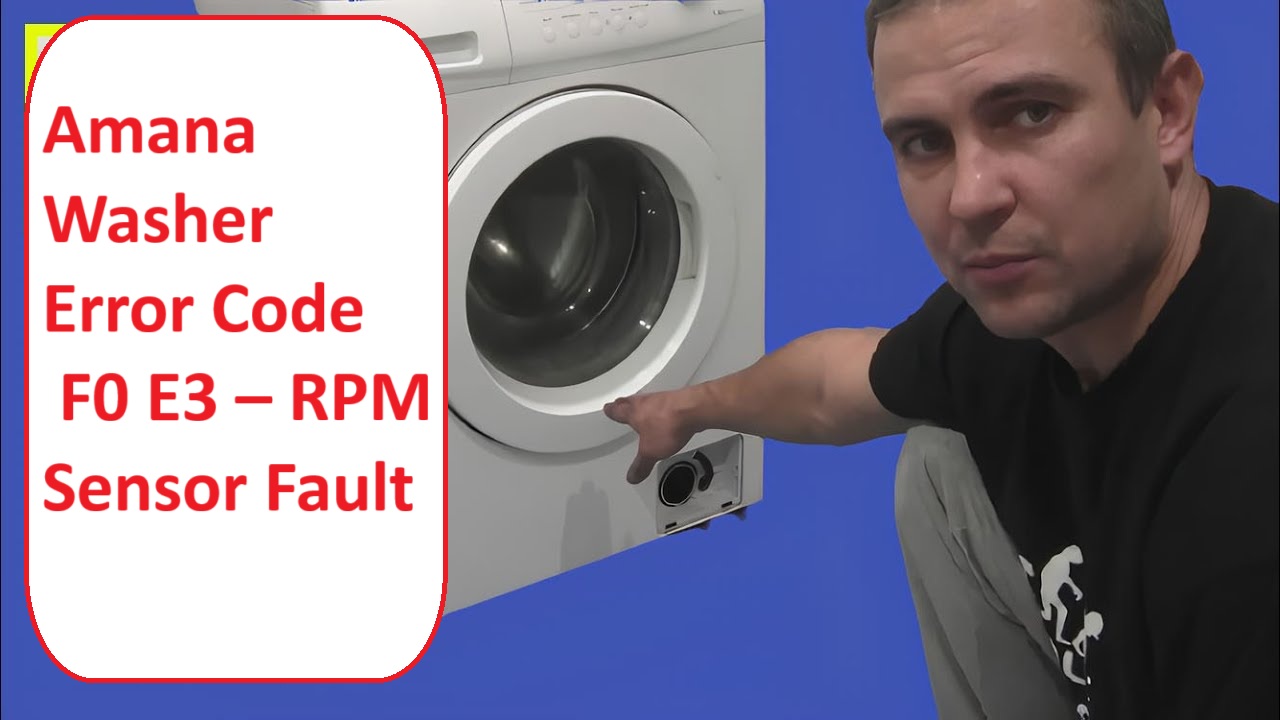
Dealing with the Amana washer error code F0 E3 can be incredibly frustrating. This specific code points to an issue with the lid lock system, which is often linked to the RPM sensor.
Don’t worry—you’re not alone in facing this problem, and the good news is that it can usually be resolved with some simple DIY solutions.
In basic terms, this error means that your washer is having trouble sensing whether the lid is securely locked, which can prevent it from starting or completing a cycle. One common cause of this error is a faulty lid lock switch, which is a relatively easy fix.
To truly understand this error and explore all potential causes and solutions, I encourage you to read through the entire post. You’ll find detailed information that can help you troubleshoot and get your washer back to working order in no time!
What Does the Error Code Means?
The error code F0 E3 on your Amana washer points to an issue with the lid lock system. This problem can stop the washer from starting or completing its cycle, which can be quite frustrating. Fortunately, there are several troubleshooting steps you can take to resolve this issue on your own.
The F0 E3 error on your Amana washer indicates a lid lock issue, potentially halting its cycle.
First, inspect the lid switch to ensure it’s functioning properly. When the lid is closed, the switch should engage securely. If you notice that it doesn’t, it may need to be replaced.
Next, you should check the calibration of the sensors. Make sure that the sensors are aligned correctly and operating as they should. Misaligned sensors can lead to this error code as well.
If you’ve gone through these steps and the problem persists, take a moment to examine the wiring. Look for any signs of damage or loose connections that might be affecting the lid lock system. Additionally, ensure that the door switch failure is not contributing to the issue, as it is essential for proper washer operation.
Common Causes Behind Error Code
Troubleshooting the F0 E3 Error Code in Your Amana Washer
The F0 E3 error code indicates a problem with the RPM sensor, which is crucial for monitoring the motor’s speed and ensuring proper operation during wash cycles. A malfunctioning door latch can also lead to related motor control issues.
Faulty RPM Sensor Connection
A faulty RPM sensor connection can trigger the F0 E3 error code on your Amana washer, and it’s essential to address this issue promptly to keep your appliance running smoothly. This error often stems from loose or corroded connections between the RPM sensor and the control board. To troubleshoot, start by inspecting the wiring harness for any signs of damage, such as frayed wires or disconnections.
Make sure to carefully examine the connector pins; they should be clean and securely attached. A secure connection is crucial for maintaining the integrity of the sensor’s performance. If you notice any corrosion or wear, this could very well be the source of your issue. Regular maintenance of these connections is key to preventing future errors. By addressing any connection problems early, you can help your washer operate efficiently and avoid unnecessary repairs down the line. Following these steps can restore proper functionality and eliminate the F0 E3 error code, ensuring that your Amana washer continues to serve you well. Always remember to unplug the washer before performing any inspections or repairs to ensure your safety. Additionally, a communication issue between the control board and the RPM sensor can also lead to similar error codes, so thorough inspection is advised.
Worn-Out RPM Sensor
If you’re encountering the F0 E3 error code, it often points to a worn-out RPM sensor as the potential issue. Over time, this vital component can wear down, leading to inaccurate readings that can disrupt your washer’s operation. It’s essential to perform regular maintenance on the RPM sensor to extend its lifespan and ensure optimal performance.
Look for signs of wear, such as corrosion or any physical damage, as these can significantly impact how the sensor functions. Conducting periodic sensor performance tests is crucial to confirm that it’s operating within the manufacturer’s specifications. If you start to notice irregularities in your washer’s spin cycle—like inconsistent speeds or failure to spin properly—it may indicate that the sensor needs replacing.
Addressing a worn-out RPM sensor promptly is key to preventing further complications that could affect your washer’s efficiency. Remember, this component plays a critical role in your washer’s overall performance, so don’t overlook it. By staying proactive, you can help maintain the reliability of your appliance and ensure it runs smoothly for years to come. Additionally, regular inspections of the drive belt can prevent issues that may arise from faulty components, ensuring your washer operates effectively.
Damaged Wiring Harness Connection
Worn-out RPM sensors aren’t the only potential cause of the F0 E3 error code; a damaged wiring harness connection can also create significant problems. When there are issues within the wiring harness, it can interrupt the signals between the RPM sensor and the control board, which is crucial for your washer’s operation.
Start by carefully inspecting the wiring harness for any signs of wear, fraying, or corrosion. These conditions can lead to intermittent or complete disconnection, which is something you definitely want to avoid. Ensure that all connectors are secure and free from any debris that could hinder a proper connection.
If you spot any damage, it’s crucial to replace the affected wiring harness promptly. Doing so will restore proper functionality and help prevent further complications down the line. Addressing these connection issues early on is key to ensuring your washer operates smoothly and efficiently. Remember, taking the time to check these components can save you from more extensive repairs in the future. Additionally, understanding the importance of wiring integrity ensures that all components communicate effectively and reduces the risk of operational failures.
Faulty Control Board Signal
When the control board in your Amana washer fails to send the correct signals, it can lead to the F0 E3 error code. This issue often arises from internal component failures within the control board, which can create interference that disrupts communication between the control board and the washer’s RPM sensor. As a result, the RPM sensor may provide inaccurate readings, leading to this error.
To diagnose the problem effectively, start by inspecting the control board for any visible signs of damage. Look for burnt components, corrosion, or any other abnormalities. If you do not see any obvious issues, the next step is to test the board using a multimeter. This tool can help you determine if the control board is functioning correctly.
If you find that the control board is indeed malfunctioning, it’s crucial to replace it. A new control board will restore proper signal transmission and help resolve the F0 E3 error code, ensuring your washer operates smoothly and efficiently. Remember, safety is paramount, so always disconnect power to the washer before performing any repairs. Additionally, common causes of control board failure can include power surges or moisture exposure, which you should consider during your diagnosis.
Required Tools to Fix the Error
Tools and Supplies Needed for Repair
In addition to the tools mentioned, having a multimeter for testing can be crucial for diagnosing electrical issues effectively.
Basic Tools
Fixing the Amana washer error code F0 E3 can seem daunting, but with the right tools and a clear approach, you can address this issue effectively. Let’s break down the essentials you’ll need to ensure a successful repair while keeping safety in mind. Here are three crucial tools to have on hand:
- Multimeter: This tool is indispensable for diagnosing electrical issues. It will allow you to test the RPM sensor and check for continuity, helping you pinpoint any faults in the electrical system.
- Screwdriver Set: A reliable screwdriver set is necessary for removing panels and accessing the internal components of your washer. Make sure you have both flat-head and Phillips-head screwdrivers to cover various screws you may encounter.
- Wrench Set: This tool is useful for tightening or loosening bolts that may need adjustment during your repair. Having the right sizes will save you time and frustration.
Equipped with these tools, you’re ready to tackle the F0 E3 error code and restore your washer to its proper functioning. Remember, preparation is key to a successful repair, so take your time and ensure you understand each step of the process. Additionally, addressing this error promptly can prevent main control board issues that may arise from neglect. Safety should always come first; if at any point you feel unsure, don’t hesitate to consult a professional technician.
Supplies
Having the right supplies is crucial when addressing the F0 E3 error code in your Amana washer. A successful repair hinges on being well-prepared with the appropriate materials. Here’s a list of essential items you should gather:
- Replacement RPM Sensor – This component is essential for rectifying the sensor fault. Ensure that it is compatible with your specific washer model to avoid further issues.
- Wire Strippers – These will be necessary for properly connecting any wires that may need splicing to facilitate the sensor replacement.
- Multimeter – This handy tool is invaluable for testing electrical connections and helping you diagnose any additional problems that might arise during your repair. Additionally, make sure to inspect wiring connections to prevent future malfunctioning cycles.
Pre-Safety Checklist Before Fixing
Before you dive into troubleshooting the Amana washer error code F0 E3, it’s crucial to conduct a pre-safety checklist to ensure a safe working environment. Your safety is the top priority before starting any repairs. Here’s a simple yet effective guide:
- Wear Safety Gear: Always put on gloves and safety glasses. This will protect you from sharp edges and any debris you might encounter while working on the washer.
- Unplug the Washer: Before you begin any repairs, make sure to disconnect the power supply. This step is vital to prevent the risk of electrical shock while you’re working on the machine.
- Clear the Repair Environment: Take a moment to remove any obstacles around the washer. A clutter-free workspace not only provides easy access but also minimizes potential hazards during your repair process. Additionally, ensure that you perform an electronic reset by unplugging the washer for at least five minutes to avoid any electrical issues during repairs.
Diagnose the Error Code
To effectively diagnose the Amana washer error code F0 E3, it’s essential to grasp what this code signifies. This specific error often indicates a problem with the RPM sensor, which is crucial for monitoring the drum’s spin speed. Here’s a step-by-step guide to help you troubleshoot this error safely and effectively:
- Inspect the Connections: Begin by checking the RPM sensor and its connections. Loose or damaged wires can lead to this fault. Ensure that all connections are secure and free from corrosion.
- Clean the Sensor Area: Dust and debris can accumulate around the sensor, impacting its performance. Gently clean the area to remove any buildup, which can enhance the sensor’s accuracy.
- Run a Diagnostic Cycle: After making adjustments, run a diagnostic cycle on your washer. This process will help you confirm whether the issue has been resolved or if the error persists.
| Step | Action | Purpose |
|---|---|---|
| Inspect Connections | Tighten any loose wires | Ensures proper sensor function |
| Clean Sensor Area | Remove debris or buildup | Improves sensor accuracy |
| Run Diagnostic Cycle | Check for persistent errors | Confirms if the issue is resolved |
Step-by-Step DIY Troubleshooting Guide
Next Steps for Resolving the F0 E3 Error Code
Check Sensor Connector Pins
Checking the sensor connector pins is an essential part of diagnosing the F0 E3 error code on your Amana washer. To begin, ensure your safety by unplugging the washer from the electrical outlet. Next, locate the RPM sensor, which is typically found near the motor. Carefully inspect the connector pins for any signs of damage or corrosion.
If you see any dirt or debris on the pins, it’s important to clean them. You can use a soft brush or a cloth dampened with isopropyl alcohol for this task. Make sure to gently remove any obstructions, as even a small amount of debris can hinder the performance of the sensor.
Once the pins are clean, reattach the connections securely. It’s crucial that they fit snugly to ensure optimal functionality. Regular maintenance of these sensor connections can help prevent future issues and prolong the lifespan of your washer.
After you’ve completed the inspection and cleaning, plug the washer back in and run a test cycle to see if the error code persists. This hands-on approach not only resolves the immediate issue but also empowers you to take charge of your appliance’s maintenance.
Inspect RPM Sensor Alignment
When it comes to inspecting the RPM sensor alignment on your washer, it’s important to approach the task methodically and safely. Start by gathering the necessary tools, which include a socket wrench and a multimeter. Before you begin, ensure that you disconnect the power to the washer to eliminate any risk of electrical hazards.
Next, locate the RPM sensor, which is usually positioned near the motor or the drum assembly. It’s crucial to check that the sensor is in the correct position—it should be parallel to the rotor for optimal performance. If you find it misaligned, use your socket wrench to gently adjust its position.
After alignment, measure the gap between the sensor and the rotor. The ideal distance should be approximately 1/8 inch. This gap is critical for the sensor to function correctly. Also, take this opportunity to perform some maintenance; clean any debris or buildup around the sensor area, as this can affect its accuracy.
Once you’ve made the necessary adjustments and maintenance, reassemble any components you may have removed and reconnect the power. Finally, run the washer to see if the error code has cleared. By following these detailed steps, you’ll enhance your washer’s performance and potentially extend its lifespan. Remember, your safety and the effective functioning of your appliance are of utmost importance.
Repair Wiring Harness Connections
Repairing wiring harness connections is a critical step in addressing the F0 E3 error code in your Amana washer. To start, ensure your safety by unplugging the washer from the power source. Next, refer to the wiring diagrams specific to your washer model; these can typically be found in the user manual or on the manufacturer’s website.
Carefully inspect all wiring connections for any signs of wear, damage, or corrosion. Loose or corroded connectors can cause operational faults, so it’s essential to address these issues. A multimeter can be an invaluable tool here—use it to test for continuity in each wire. If you discover any loose connections, make sure to reattach them securely. For any damaged wires, replacing them is the best course of action.
Once you’ve completed these repairs, plug the washer back in and run a test cycle to see if the error code has cleared. If the F0 E3 error persists, it may indicate that further investigation is needed into other components of the washer. Remember, safety is paramount, so take your time and don’t hesitate to seek professional help if you’re unsure about any step of the process.
Replace Control Board Battery
To address the F0 E3 error code effectively, replacing the control board battery is an essential step in your troubleshooting journey. Start by ensuring your safety—unplug the washer from the power source.
Next, you’ll need to access the control panel. This typically involves removing any screws that secure it in place. Once you’ve done that, carefully detach the control board from the panel, taking note of how the connections are made so you can reassemble them correctly later.
Now, locate the battery on the control board; it’s usually a small, round coin-cell type. Gently take out the old battery—be mindful of the orientation, as the new battery needs to be installed with the correct polarity. Insert the new battery in the same position as the old one.
After replacing the battery, reattach the control board to the panel and secure it with the screws you removed earlier. With everything back in place, plug the washer back in and run a test cycle to ensure everything is functioning properly.
Call a Professional If
If you’ve been troubleshooting the Amana washer error code F0 E3 and haven’t had any luck, it’s time to consider bringing in a professional. This particular error often points to a problem with the RPM sensor, which can be tricky to diagnose and fix on your own.
When you continue to experience issues despite your efforts, consulting an expert ensures that you tackle the underlying problem effectively. Professionals come equipped with the right tools and expertise to perform in-depth diagnostics that go beyond what most homeowners can manage. They can determine whether the trouble lies with the RPM sensor, the control board, or the wiring.
Choosing to have a professional handle the repair not only saves you valuable time but also minimizes the risk of causing further damage due to incorrect handling. So, if you find yourself stuck with the F0 E3 code, don’t hesitate to reach out for expert assistance. This way, you can safely restore your washer’s functionality without the added stress.