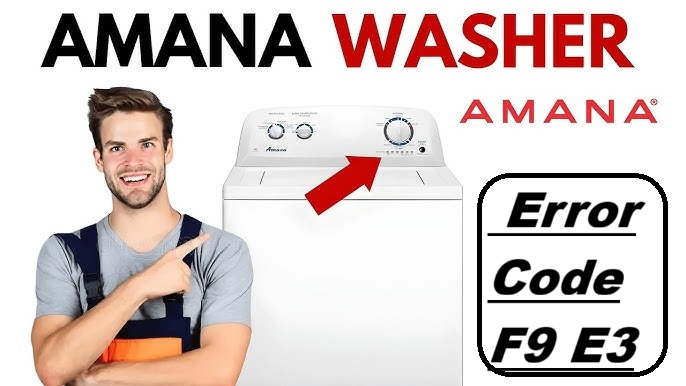
It’s frustrating when you’re in the middle of doing laundry and suddenly encounter the Amana Washer Error Code F7 E3. This error indicates a control board fault, which essentially means there’s a communication issue between the control board and the motor control unit.
You’re definitely not alone—many users face this problem, and the good news is that there are often simple DIY solutions available.
One common cause of this error is a loose or damaged wiring connection between the control board and the motor control unit. However, there could be other factors at play as well.
To get a comprehensive understanding of this issue and explore all potential causes and solutions, I encourage you to read through the entire post. By doing so, you can save yourself time and frustration and get your washer back in working order.
What Does the Error Code Means?
When you encounter the Amana washer error code F7 E3, it signals a communication breakdown between the control board and the motor control unit. This issue often stems from loose connections or faulty components. To resolve it, begin with some straightforward troubleshooting steps.
The F7 E3 error code in Amana washers indicates a communication issue between the control board and motor control unit.
- Inspect Connections: Carefully check all wiring and connectors for signs of damage or disconnection. A loose wire can easily disrupt communication between components.
- Control Board Check: Ensure that the control board is securely mounted and free from any debris that could interfere with its operation. A clean, properly seated control board is crucial for optimal performance.
- Regular Maintenance: Incorporate routine maintenance into your washer care. Regularly clean the interior and inspect hoses for leaks or clogs. This proactive approach can help prevent future error codes.
If you’ve gone through these basic checks and the issue persists, it may be time to consult a professional technician. They have the expertise to diagnose and repair more complex issues that might not be apparent at first glance. By following these steps and maintaining your washer diligently, you can enhance its performance and longevity, reducing the chances of encountering error codes like F7 E3 in the future. Additionally, ensure that the temperature sensor is functioning properly to prevent overheating issues. Remember, a little preventive care goes a long way!
Common Causes Behind Error Code
Identifying the Causes of F7 E3 Error Code The error code F7 E3 can often be attributed to malfunctioning components that disrupt communication between the control board and other parts of the washer.
Faulty Wiring Connections
Faulty wiring connections can be a common culprit behind the F7 E3 error code in Amana washers. These disruptions can significantly affect your machine’s communication and overall functionality. When the insulation on wiring is damaged or frayed, it can create shorts or breaks in the circuit, leading to unstable connections.
To tackle this issue, begin by inspecting all visible wiring for any signs of wear, such as cracks or exposed wires. It’s essential to ensure that all connections are secure; loose wires can compromise the stability of the connection and cause erratic behavior from the control board. Additionally, keep an eye out for any moisture or corrosion, as these factors can worsen wiring problems. Addressing these issues promptly can help restore normal function and prevent future errors.
Defective Control Board
A defective control board is often the culprit behind the F7 E3 error code in Amana washers. If you find yourself facing this issue, it’s important to carry out control board diagnostics to pinpoint any possible problems. Common issues with circuit boards can arise from manufacturing defects, wear and tear over time, or electrical surges. These factors can hinder the functionality of the control board, resulting in unpredictable behavior in your washer.
When the control board malfunctions, it may struggle to communicate properly with other components, disrupting the entire washing cycle. Start by inspecting the board for any visible signs of damage, such as burnt components or loose connections. If you suspect that the control board is defective, replacing it might be the best course of action to restore proper operation and eliminate the F7 E3 error code. Additionally, issues with EEPROM memory communication can also contribute to control board problems, so it’s essential to consider all potential factors during diagnostics.
Corroded Component Connections
Corroded component connections can significantly contribute to the F7 E3 error code in your Amana washer. When moisture and debris build up, they create corrosion that disrupts the electrical flow and signals necessary for your washer to function properly. This problem often stems from inadequate maintenance of connections, which can lead to intermittent or complete communication failures between components.
To help prevent these issues, it’s essential to regularly inspect and clean the electrical connections in your washer. Look for any signs of corrosion or oxidation, and ensure the connections are free from debris. Utilizing dielectric grease can be an effective way to protect these critical connections from future corrosion, creating a barrier against moisture and contaminants. Additionally, keeping the area around the washer dry can help mitigate moisture-related issues, which is essential for maintaining optimal performance.
Maintaining a clean and dry environment around your washer is crucial. Excess moisture can accelerate corrosion, so be mindful of any spills or leaks in the area.
Faulty Sensor Malfunctioning
When the sensors in your Amana washer start to malfunction, they can trigger the F7 E3 error code, which disrupts the normal operation of your appliance. This issue often arises from two main factors: wear and tear over time or exposure to moisture, both of which can affect the sensors’ performance.
To begin addressing this problem, it’s crucial to conduct a thorough sensor test. This process evaluates whether the sensors are providing accurate readings and functioning correctly. If the sensors do not pass the test, replacement may be necessary to restore your washer’s functionality.
In addition to testing the sensors, it’s essential to inspect the wiring connected to them. Ensure that all connections are secure and free from any signs of corrosion or damage. Faulty wiring can send incorrect signals to the sensors, complicating the troubleshooting process further. Additionally, malfunctioning control board can arise from faulty sensors, which may require further investigation to ensure proper operation.
Required Tools to Fix the Error
Essential Tools for Repairing Amana Washer Error F7 E3
When addressing issues related to the error code F7 E3, it’s crucial to have the right equipment on hand to ensure a successful repair. Additionally, using a multimeter for testing electrical components can help diagnose further issues that may not be immediately apparent.
Basic Tools
Having the right tools at your disposal is crucial for effectively addressing the Amana washer error code F7 E3. With over 20 years of experience in appliance repair, I can assure you that employing basic repair techniques will streamline your troubleshooting process and help you resolve the issue with confidence. Here’s a list of essential tools you should have in your toolkit:
- Screwdrivers: Make sure to have both flathead and Phillips screwdrivers on hand. These will be necessary for removing panels and securing components as you work on your washer.
- Multimeter: This is an indispensable tool for testing electrical connections. A multimeter will allow you to diagnose faults accurately, ensuring that you can pinpoint the issue effectively.
- Socket Set: A good socket set is essential for loosening or tightening nuts and bolts on your washer. Properly securing components is vital for the safe operation of your appliance.
- Pliers: Pliers are useful for gripping and manipulating wires or small parts. They can be particularly handy when working in tight spaces.
Equipped with these tools, you’ll be well-prepared to tackle the control board fault associated with the F7 E3 error code and restore your washer’s functionality. Remember, having the right equipment not only enhances the repair process but also helps ensure your safety while working. Additionally, understanding the importance of drive belt failure can provide valuable insights into other potential issues that may arise with your washer. Take your time, follow safety precautions, and you’ll be on your way to a successful repair.
Supplies
To effectively address the F7 E3 error code on your Amana washer, you’ll need to gather a few essential supplies. Having these items on hand will streamline your troubleshooting process and help ensure a successful repair. Here’s a list of what you’ll need:
- Multimeter: This tool is crucial for testing electrical components for continuity and voltage. It will help you diagnose whether the control board or other parts are functioning properly.
- Screwdriver Set: A good set of screwdrivers will allow you to safely access the control board and other internal components of your washer.
- Replacement Control Board: If you determine that the existing control board is faulty, having a replacement on hand will be necessary for restoring your washer’s functionality.
- Protective Gloves: Always prioritize safety when working with electrical components. Wearing protective gloves will help safeguard you against potential electrical hazards.
Additionally, be sure to check for loose connections as they can often lead to control board faults.
Pre-Safety Checklist Before Fixing
Before you get started on repairing your Amana washer that’s showing the F7 E3 error code, it’s crucial to conduct a comprehensive safety checklist. Prioritizing safety equipment and personal precautions will not only protect you but also ensure a smoother repair process. Here’s a straightforward guide to follow:
Before repairing your Amana washer with the F7 E3 error, ensure you follow a thorough safety checklist for a safe and effective process.
- Unplug the Washer: Always confirm that the washer is unplugged from the electrical outlet to eliminate any risk of electrical shock. This step is non-negotiable before you begin any repairs.
- Wear Safety Goggles: Protect your eyes from any debris or small parts that might come loose during the repair. A good pair of safety goggles can prevent injuries that could occur from unexpected accidents.
- Use Gloves: Wearing gloves is essential to safeguard your hands from sharp edges and prevent electrical shocks. Choose insulated gloves if you’re working near any electrical components.
- Maintain a Tidy Workspace: Keep your workspace organized and free from clutter to minimize tripping hazards. A clean area will help you focus better on the task at hand and reduce the risk of accidents. Additionally, ensure that you’ve checked for any loose electrical connections that might lead to further issues during your repair process.
Diagnose the Error Code
Diagnosing the F7 E3 error code on your Amana washer can be straightforward when you approach it methodically. As an experienced appliance repair technician, I want to guide you through this process safely and effectively.
Start by entering the washer’s diagnostic mode. This crucial step allows you to identify specific issues that may be causing the F7 E3 error code, which is often related to control board faults. To get into diagnostics mode, I recommend referring to your user manual for the precise button sequence, as it can vary between models.
Once you’re in diagnostic mode, take a moment to observe any additional error codes that may appear. These codes can provide further insights into underlying issues that might not be immediately apparent. Pay close attention to how the control board responds to your commands; any irregularities in its performance could indicate a malfunction.
Next, ensure that all connections are secure and free from corrosion. Loose or corroded connections can disrupt the washer’s performance and may be the root cause of the error code.
Step-by-Step DIY Troubleshooting Guide
Moving Forward: Next Steps for Resolving the F7 E3 Error
Inspect Wiring for Damage
Inspecting the wiring for damage is a crucial step in troubleshooting the Amana washer error code F7 E3. To ensure your safety during this inspection, start by unplugging the washer from the power source. This simple action will protect you from any electrical hazards while you work.
Once the washer is unplugged, take a close look at all visible wires. You’re looking for signs of fraying, breaks, or corrosion. Pay particular attention to the connections at both the control board and the motor, as these areas are often prone to wear and tear.
Using a multimeter can be incredibly helpful here. Check for continuity and voltage where it applies. This step is essential as it will give you a clearer picture of any potential damage. If you discover any damaged wires, make a note of their locations and the extent of the damage. Documenting your findings is important, as this information will be invaluable for the next steps in resolving the error code.
A thorough wiring inspection not only helps you identify current issues but can also prevent future problems, ensuring that your washer operates at peak performance. Always remember that taking the time to check the wiring can save you from more significant repairs down the line, and it’s a key part of maintaining your appliance’s health.
Repair Corroded Connections
After assessing for any damaged wiring, the next critical step is to address any corroded connections you may have identified. Corrosion can significantly disrupt the flow of electricity, potentially triggering error codes like F7 E3. To ensure a reliable repair, follow these steps to clean and maintain these connections effectively.
1. Identify Corrosion: Before you begin, inspect the affected connections carefully to determine the severity of the corrosion.
2. Cleaning Process: Depending on the type of corrosion, you will need to use different methods to clean the connections:
| Corrosion Type | Repair Method |
|---|---|
| Light Corrosion | Use a wire brush to gently clean the area, removing any surface corrosion. |
| Moderate Corrosion | Sand down the connection to bare metal, ensuring a clean surface for optimal conductivity. |
| Heavy Corrosion | In this case, it’s best to replace the affected parts entirely to ensure safety and reliability. |
| Oxidation | Apply a contact cleaner to refresh the connection and enhance electrical flow. |
3. Prevention: After cleaning, apply an anti-corrosion spray to protect against future corrosion and ensure long-lasting maintenance of your connections.
Replace Faulty Sensor
Replacing a faulty sensor is an effective way to resolve the F7 E3 error code and bring your Amana washer back to working order. Let’s walk through the process step by step to ensure you feel confident and safe while making this repair.
First, you need to identify which sensors are in your washer. Common types include water level sensors, temperature sensors, and door lock sensors. Understanding which one is causing the issue is key to a successful repair.
Safety is paramount, so begin by disconnecting the power supply to your washer. This will prevent any risk of electrical shock while you work.
Next, remove the access panel on your washer. This may involve unscrewing a few screws, but be sure to keep them in a safe place for reassembly later. Once you have the panel off, you’ll have access to the sensor that needs replacing.
Carefully disconnect the wiring harness connected to the faulty sensor. Take your time with this step, as you don’t want to damage any other components. After the wiring is disconnected, unscrew the old sensor and remove it from its housing.
Now, it’s time to install the new sensor. Follow the steps in reverse: place the new sensor into the housing and secure it with screws. Reconnect the wiring harness, ensuring that all connections are snug and secure.
Once the new sensor is in place, reattach the access panel. Double-check that it’s fitted properly and all screws are tightened.
Finally, restore power to your washer and run a diagnostic cycle. This will help you confirm that the F7 E3 error code has been cleared. If everything is functioning properly, your washer should operate smoothly without any further issues.
If you encounter any difficulties during this process or if the error persists, it may be wise to consult a professional technician. Remember, it’s always better to be safe than sorry when it comes to appliance repairs. Happy fixing!
Test Sensor Voltage Output
Once you’ve replaced the faulty sensor, it’s crucial to test its voltage output to ensure it’s functioning properly. Safety is always the top priority, so begin by unplugging the washer. After that, locate the wire harness connected to the sensor. You’ll need a multimeter, so set it to the DC voltage mode.
With the multimeter ready, carefully connect the probes to the sensor terminals. After you’ve made the connections, plug the washer back in and start a cycle that activates the sensor. Keep a close eye on the voltage reading displayed on the multimeter. Ideally, it should align with the manufacturer’s specifications, often around 5V, which you can confirm in your washer’s service manual.
If the voltage reading falls outside the expected range, this could indicate a problem. You might need to replace the sensor again or investigate further for issues in the wiring or control board. Remember, understanding these readings not only helps you diagnose the problem but also empowers you to make informed decisions regarding repairs. Always take your time and ensure everything is done safely.
Call a Professional If
If you’ve followed all the troubleshooting steps and still can’t resolve the F7 E3 error on your Amana washer, it may be time to call in a professional. This error often points to more complex issues, such as problems with the control board or wiring. Attempting to fix these issues without the proper expertise can not only exacerbate the problem but also pose safety risks.
When dealing with intricate electrical components, specialized knowledge is essential. A professional technician will be able to accurately diagnose the issue and determine whether a part needs replacing or if a different repair is necessary. By enlisting expert help, you can ensure that your washer is returned to optimal working condition, minimizing the chances of future breakdowns and saving you valuable time and energy.