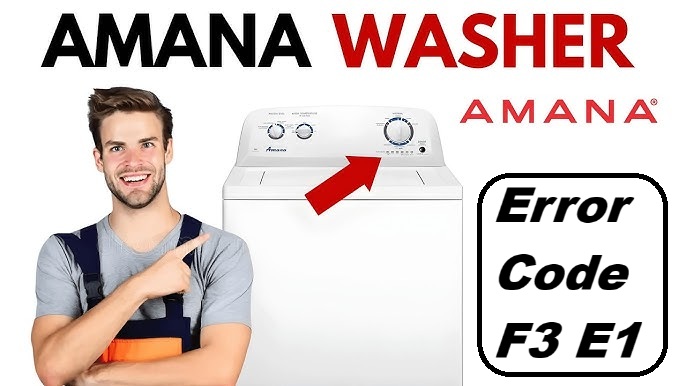
Dealing with the Amana washer error code F3 E1 can be incredibly frustrating, especially when you’re in the middle of a laundry day.
This specific error code typically indicates a problem with a stuck button, which can halt your washing machine’s operation.
The good news is that you’re not alone—this is a common issue that many Amana washer users face, and in most cases, the solutions are quite simple and can be handled on your own.
One common cause of this error is debris or dirt that gets trapped around the control buttons, causing them to stick.
To get a better understanding of this error and discover additional potential causes and solutions, I invite you to read through the entire post.
With a little patience and the right knowledge, you can have your washer back in working order in no time!
What Does the Error Code Means?
The Amana washer error code F3 E1 signifies a problem with the temperature sensor, specifically indicating that the washer is struggling to accurately read the water temperature. This can interfere with the wash cycle, leading to unsatisfactory cleaning results.
To effectively tackle this issue, here are some practical troubleshooting steps you can take:
- Reset the Washer: Start by unplugging the washer for a few minutes. This can help reset the system and may clear the error.
- Check Wiring Connections: Inspect the wiring connections leading to the temperature sensor. Look for any loose, damaged, or corroded wires that may be affecting the sensor’s functionality.
- Examine the Temperature Sensor: Take a close look at the temperature sensor itself. Look for signs of wear, damage, or any visible issues that could indicate a malfunction. Additionally, the thermistor failure may also lead to similar symptoms, so be mindful of that during your inspection.
Common Causes Behind Error Code
Identifying Common Causes of the F3 E1 Error Code. One common reason for this error is a stuck button on the control panel due to moisture or debris buildup.
Worn-Out Control Panel Button
If you’ve come across the F3 E1 error code on your Amana washer, there’s a good chance that a worn-out control panel button is to blame. With regular use, buttons can become less responsive or even stick, which can disrupt your laundry routine. It’s important to keep an eye on these components, as regular maintenance can help extend their lifespan. However, when wear and tear become too severe, replacing the buttons may be necessary.
Here’s a guide to help you identify the symptoms of a worn-out button and the techniques for replacement:
| Symptoms of Worn-Out Button | Button Replacement Techniques |
|---|---|
| Unresponsive button | First, ensure the washer is powered off to prevent any electrical hazards. |
| Stuck button | Carefully remove the control panel following the manufacturer’s guidelines. |
| Visible wear and tear | Replace the worn buttons with new ones, ensuring they match your model specifications. |
Additionally, regularly checking for keypad issues can prevent the occurrence of error codes like F3 E1 in the future. Remember to always prioritize safety when working on appliances. If you’re unsure about any step, don’t hesitate to consult your user manual or reach out to a professional for assistance. Your washer is an important tool in your home, and maintaining it will keep it running smoothly for years to come.
Faulty Wiring Connection
Faulty wiring connections are a common culprit behind the F3 E1 error code in Amana washers. As a seasoned appliance repair technician with over 20 years of experience, I want to guide you through a thorough troubleshooting process that can help you resolve this issue effectively.
First, it’s essential to carefully inspect all wiring connections related to the control board and the buttons. Loose, frayed, or damaged wires can disrupt communication within your washer, leading to misinterpretation of signals. Begin by examining the wiring harness connected to the control board. Ensure that all connections are secure and free from corrosion, which can also impact performance.
If you come across any damaged wires during your inspection, it’s important to address them promptly. Depending on the extent of the damage, you may need to repair or replace the affected wiring to restore proper function to your washer. Additionally, don’t overlook the control panel itself—make sure it is properly connected as well. By following these detailed steps in your wiring troubleshooting, you can eliminate the F3 E1 error code and get your washer back to working order.
Always remember that faulty wiring can contribute to communication issues, so taking your time and ensuring everything is secure is key to successful appliance repair. Stay safe and patient throughout the process!
Debris Under Control Panel
When troubleshooting your Amana washer for the F3 E1 error code, it’s crucial not to overlook the potential for debris buildup under the control panel. Accumulations of dirt, lint, and dust can obstruct the buttons, leading to incorrect signals or functions that may seem stuck. Regular maintenance of the control panel is key to ensuring your washer operates smoothly.
To clean the area safely, consider using compressed air or a soft brush. These methods are effective for removing debris without risking damage to the delicate components of the control panel. After you’ve cleaned the area, take a moment to check if the error code continues to appear. If it does, you may need to conduct further investigations to identify other underlying issues. Additionally, the door latch mechanism is another critical component that can cause error codes if not functioning properly.
Maintaining a clean control panel not only helps prevent error codes but also contributes to the overall longevity of your washer. Make it a routine to inspect and clean your appliance regularly. This proactive approach will help you achieve optimal performance and save you from potential repair costs down the line. Remember, a little regular care goes a long way in keeping your washer in excellent working condition.
Control Board Malfunction
When your Amana washer shows the F3 E1 error code, it’s typically due to a malfunction in the control board. This crucial component can face various issues, such as loose connections, worn-out parts, or even software glitches. To accurately determine the problem, it’s important to use diagnostic tools specifically designed for washing machines. These tools can help you pinpoint whether the control board is the source of the issue or if other components are to blame.
If you find that the control board is indeed malfunctioning, replacing it with a compatible part is a practical solution to restore your washer’s functionality. It’s advisable to consult your washer’s user manual or contact a professional for guidance on selecting the right replacement part. Additionally, timely action is essential because ignoring error signs can lead to more extensive damage.
Furthermore, to help prevent future malfunctions, regular maintenance and inspections are key. This practice not only extends the life of your washer but also ensures it operates smoothly and efficiently. If you ever feel uncertain about handling repairs, don’t hesitate to reach out to a qualified technician for assistance. Your safety and the longevity of your appliance are the top priorities.
Required Tools to Fix the Error
Essential Tools for Troubleshooting the F3 E1 Error
When addressing the F3 E1 error, having the right tools is crucial for effective troubleshooting. Additionally, it’s important to ensure that you are prepared to check for door lock assembly issues that could be affecting the washer’s performance.
Basic Tools
To resolve the Amana washer error code F3 E1, you’ll need a few essential tools that will help you effectively manage common issues, ensuring your washer remains in good working condition. As someone who’s been in the appliance repair field for over 20 years, I can assure you that having the right tools makes a significant difference in your repair efforts. Here’s a list of what you’ll need:
- Screwdriver Set: Both flathead and Phillips screwdrivers are essential for accessing various components of your washer. Different screws may require different types, so having both types on hand is crucial.
- Multimeter: This tool is invaluable for performing electrical diagnostics. It helps you measure voltage, resistance, and continuity to identify electrical issues that might be causing the error code.
- Needle-nose Pliers: These are useful for manipulating small components or wires within your washer. Their precision allows you to grip and pull parts without causing damage. Regular maintenance checks can also help prevent issues like NVM memory errors from occurring in the first place.
Supplies
Having the right supplies on hand can significantly streamline the process of addressing the F3 E1 error code on your Amana washer. With over 20 years of experience in appliance repair, I’ve found that being well-prepared can make all the difference. To effectively tackle this issue, you’ll need a few essential items:
- Cleaning Supplies: It’s crucial to have cleaning agents like vinegar or isopropyl alcohol. These will help you remove any debris or residue that may be causing the control buttons to stick.
- Replacement Parts: It’s wise to have a few common replacement parts on hand. This includes buttons and control board components. If cleaning doesn’t resolve the issue, these parts might need replacing to restore your washer’s functionality.
- Multimeter: A multimeter is an indispensable tool for diagnosing electrical issues. This device will help you check voltage levels and ensure that electrical components are functioning correctly.
Additionally, it’s important to inspect the keypad circuit for visible damage or wear, as this may also contribute to the F3 E1 error.
Here’s a quick checklist of supplies you should gather before you start troubleshooting:
- Cleaning Supplies: Vinegar or isopropyl alcohol
- Replacement Parts: Buttons and control board components
- Multimeter: For diagnosing electrical issues
Pre-Safety Checklist Before Fixing
Before you begin any repairs on your washer, ensuring your safety and safeguarding the appliance itself is of utmost importance. Here’s a straightforward checklist to help you set up a secure environment for troubleshooting:
- Unplug the washer: Always disconnect it from the power source before starting any repair work. This simple step is crucial to prevent any risk of electrical shock, which can be dangerous.
- Wear gloves and safety goggles: Protecting yourself is key. Gloves will shield your hands from sharp edges or components, while safety goggles will safeguard your eyes from any debris that might come loose during the repair.
- Keep the area dry and organized: A tidy workspace is essential for your safety. Make sure the floor is dry to avoid slips and falls, and keep your tools and parts arranged neatly. This will help you work efficiently and minimize the risk of accidents. Additionally, ensure that you are aware of the safety protocols during repairs to further enhance your safety while working on the washer.
Diagnose the Error Code
To effectively tackle the F3 E1 error code on your Amana washer, it’s crucial to start with an accurate diagnosis. This error often signifies a stuck button or a malfunctioning control board. Here’s a step-by-step guide to help you pinpoint the issue.
- Error Message Analysis: Understand that the F3 E1 code typically relates to a problem with the control panel. This could involve stuck buttons or a more serious control board malfunction.
- Button Functionality Testing: Begin by testing each button on the control panel. Press each one individually and pay close attention to their responsiveness. If any button feels stuck or doesn’t respond at all, it could be the culprit behind the error code.
- Document Your Findings: Keep a record of which buttons are functioning properly and which ones are not. This information will be invaluable as you troubleshoot further.
- Next Steps: If you identify a problematic button, consider cleaning around it to remove any debris that may be causing it to stick. If the button still fails to respond, you may need to replace the control panel or consult with a professional technician for more in-depth troubleshooting.
Step-by-Step DIY Troubleshooting Guide
Next Steps for Resolving F3 E1 Error Code
Replace Worn Control Button
Replacing a worn control button on your Amana washer is a straightforward process that can restore its functionality and resolve the F3 E1 error code. With over 20 years of experience in appliance repair, I’m here to guide you through each step with clarity and safety in mind. Let’s get started:
| Step | Action |
|---|---|
| 1 | Unplug the washer: Always ensure your appliance is disconnected from the power source to prevent any electrical hazards. |
| 2 | Remove the control panel screws: Locate the screws securing the control panel. Use a screwdriver to carefully remove them. Keep these screws in a safe place for reassembly. |
| 3 | Detach the control panel: Once the screws are removed, gently lift the control panel away from the washer. Be cautious not to damage any wiring connected to the panel. |
| 4 | Swap out the worn button: Identify the worn control button and carefully disconnect it from the panel. Replace it with a new button, ensuring it fits securely and aligns properly with the panel. |
| 5 | Reassemble the control panel: Reattach the control panel by aligning it back into place and securing it with the screws you removed earlier. |
Before you plug the washer back in, double-check that everything is aligned correctly and that there are no loose wires. Once you’ve reassembled the panel, reconnect the power and test the washer. If the F3 E1 error persists, you may need to investigate other components, but a worn button is frequently the main issue.
Repair Loose Wiring Connections
After addressing the worn control button, the next potential cause of the F3 E1 error code could be loose wiring connections. Safety is paramount, so start by unplugging your washer to ensure no power is running through the machine.
Next, carefully remove the control panel cover using a screwdriver. Take your time to inspect all wiring connections thoroughly for any signs of looseness or wear. Pay extra attention to the connectors attached to the control board, as these are often the source of electrical issues.
If you identify any loose connections, make sure to reconnect them securely. It’s also a good practice to check for any frayed or damaged wires, as these can lead to further complications down the line. If you do find any damaged wires, replacing them is crucial to maintaining the safety and functionality of your washer.
Once you’ve completed your inspection and made the necessary repairs, reassemble the control panel and plug the washer back in. Run a test cycle to determine if the error code persists. If the F3 E1 error code continues to appear, further troubleshooting may be required, and it might be best to consult a professional technician. Remember, taking the time to ensure everything is secure and in good condition can save you from more significant issues in the future.
Clear Debris From Control Panel
Clearing debris from the control panel of your Amana washer is crucial to ensure it operates smoothly and efficiently. Regular maintenance of the control panel not only helps prevent malfunctions but also addresses common error codes, such as F3 E1. Here’s a straightforward guide to effectively clean your control panel:
| Step | Action | Tools Needed |
|---|---|---|
| 1 | Unplug the washer | None |
| 2 | Inspect the control panel | Soft cloth |
| 3 | Wipe down buttons and surface | Mild detergent |
| 4 | Reconnect and test | None |
Start by unplugging your washer to ensure safety while you work on it. Carefully inspect the control panel for any buildup of dirt, dust, or debris. Using a soft cloth dampened with a mild detergent, gently clean each button and the surrounding area to remove any residue. This not only enhances the appearance of the panel but also ensures that buttons respond properly.
Once you have finished cleaning, plug the washer back in and test the buttons to verify that they function correctly. Keeping the control panel clean is a simple yet effective way to prolong the life of your appliance and maintain its performance. Remember, regular maintenance can prevent minor issues from escalating into more significant problems.
Replace Control Board
A malfunctioning control board can result in persistent error codes, such as F3 E1, in your Amana washer. If you’ve tried other troubleshooting methods without success, it may be time to consider replacing the control board.
First and foremost, ensure your safety by unplugging the washer before beginning any repairs. Next, you’ll need to remove the screws that secure the control panel. This will allow you to gently detach the panel and access the control board behind it.
Carefully disconnect the wiring harnesses that are attached to the control board, taking note of their positions. This will make reassembly easier later on. Once you have the old board removed, install the new control board, ensuring that all connections are secure and properly aligned.
After replacing the board, reattach the control panel and tighten the screws to secure it back in place. Finally, plug the washer back in and run a diagnostic test to verify that the F3 E1 error code has been resolved.
Call a Professional If
If you’ve attempted to troubleshoot the F3 E1 error code on your Amana washer and haven’t found a solution, it may be the right time to reach out to a professional. Deciding whether to tackle repairs yourself often depends on your comfort level and experience with appliance issues.
If you’ve already replaced the control board and are still encountering problems, seeking professional help is a wise choice. Experienced technicians have the right tools and knowledge to diagnose more complex electrical or mechanical issues that may not be immediately apparent.
If you’ve replaced the control board and issues persist, consulting a professional can help identify hidden electrical or mechanical problems.
Additionally, if you notice unusual sounds, leaks, or persistent error codes, it’s best to refrain from further DIY attempts. Continuing to troubleshoot without the necessary expertise can lead to more significant damage or safety risks.
A qualified technician will ensure your washer is repaired safely and effectively, restoring its functionality without compromising your appliance’s integrity. Remember, when in doubt, it’s always better to consult an expert. Your safety and the longevity of your appliance are paramount.