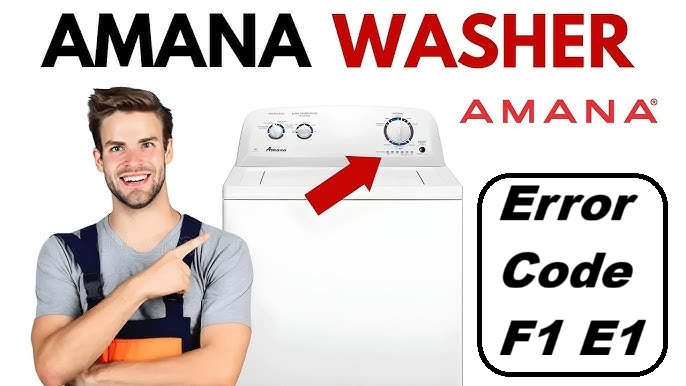
Dealing with your Amana Washer suddenly flashing the Error Code F1 E1 can be incredibly frustrating. This specific code signals a communication breakdown between the control board and the user interface, which can bring your laundry day to a screeching halt.
The good news is that this is a common issue, and many of the underlying causes are relatively simple to address with a bit of DIY effort.
One frequent culprit behind this error is a loose or damaged wiring connection. If you suspect this might be the case, I encourage you to read through the entire post.
We’ll cover everything you need to know about the F1 E1 error, including additional causes and step-by-step solutions to help you get your washer back up and running smoothly.
Don’t worry—you’re not alone in this, and with the right guidance, you can tackle this problem head-on!
What Does the Error Code Means?
When your Amana washer shows the error code F1 E1, it signifies a communication problem between the control board and the user interface. Essentially, this means that the washer is having trouble sending commands or receiving feedback, which can interrupt its normal functioning.
The F1 E1 error code on your Amana washer indicates a communication issue between the control board and user interface.
To troubleshoot this issue, start by unplugging the washer for a few minutes. This simple step can reset the control board and may resolve the error. Next, check all wiring connections for any signs of damage or looseness, as these can often be the culprits behind communication issues.
If you’ve gone through these steps and the error persists, it’s wise to examine the user interface for any faults. Sometimes, the interface itself may need to be repaired or replaced.
Should you continue to face difficulties, don’t hesitate to reach out to a professional technician for a more in-depth diagnosis and repair. Understanding the meaning behind error codes like F1 E1 is crucial for effective troubleshooting and getting your washer back to working order safely and efficiently. Remember, safety first—always ensure the appliance is unplugged before performing any checks. Additionally, consider that common causes of error codes can vary, so thorough examination and understanding of your washer’s components is essential.
Common Causes Behind Error Code
Potential Issues to Investigate
Common Causes Behind Error Code
Identifying the cause of the F1 E1 error code requires a thorough investigation of potential issues. One important factor to consider is the communication failure between the control board and user interface, as it can significantly impact the washer’s operation.
Faulty Wiring Connections
Faulty wiring connections are often at the heart of the Amana washer’s F1 E1 error code. If you find yourself facing this error, it’s crucial to conduct a meticulous inspection of the wiring. Start by examining all connections between the control board and the various components of your washer. Make sure that every connection is secure and that there are no signs of corrosion or damage.
Loose or frayed wires can significantly disrupt the stability of these connections, potentially leading to communication failures in the washer’s system. It’s also wise to check the main power supply for any issues that could impact your washer’s performance. If you spot any irregularities, it’s important to address them right away to avoid further complications. Additionally, ensuring tight connections can prevent communication breakdowns that lead to error codes like F1 E1.
Faulty Control Board Components
A malfunctioning control board can often be the root cause of the F1 E1 error code in your Amana washer. Think of the control board as the brain of your washing machine; it oversees the operation of various functions and components. When certain parts within the control board fail, you may encounter this error.
Some common issues to look for include damaged relays, defective capacitors, or malfunctioning microprocessors. To diagnose these problems safely and effectively, you’ll want to perform component testing on the control board. This involves checking each component for continuity and ensuring they are functioning as they should.
If during your inspection you identify any faulty components, you may need to replace them. In some cases, it might be more practical to replace the entire control board to restore your washer’s functionality and eliminate the F1 E1 error code. Remember to always prioritize safety by unplugging the machine before you start any diagnostic or repair work. This way, you can confidently troubleshoot and fix the issue. Additionally, checking connections and wiring can help prevent future errors related to control board functionality.
Corroded Connectors or Terminals
Corroded connectors or terminals can trigger the F1 E1 error code in your Amana washer, often complicating issues related to the control board. Corrosion typically occurs when connectors are exposed to moisture, resulting in poor electrical connections and operational failures. To mitigate this risk, regular maintenance of your washer’s connectors is crucial.
Start by inspecting the connectors periodically for any signs of rust or buildup. If you notice corrosion, it’s important to clean the affected areas with a suitable contact cleaner. Make sure the connectors are thoroughly dry before reconnecting them to ensure optimal functionality. Additionally, applying a corrosion prevention spray can be an effective way to protect terminals from future damage. Regularly checking the control panel connections can also help prevent errors like F1 E1 from occurring.
Faulty Sensor Malfunction
When your Amana washer shows the F1 E1 error code, it often indicates an issue with a malfunctioning sensor. The most common culprits are the water level sensor and the temperature sensor, both of which play essential roles in the washer’s operation. When these sensors fail, they can send incorrect signals to the control board, leading to the error code you’re seeing.
To troubleshoot this issue, begin by visually inspecting the sensors for any signs of damage or disconnection. Look for frayed wires or loose connections that could be causing the malfunction. Next, use a multimeter to test the sensors’ resistance; this will help you determine if they are functioning correctly. If you find that a sensor is indeed faulty, it will need to be replaced to restore proper operation. Additionally, a faulty water level sensor can lead to incorrect water levels, affecting the washer’s overall performance.
I recommend performing regular maintenance on your washer, which can help prevent these types of issues from arising in the first place. By taking good care of your appliance and addressing minor problems early, you can ensure your washer runs smoothly and avoid the frustration of error codes in the future. Remember, safety is paramount, so always unplug the machine before performing any inspections or repairs.
Required Tools to Fix the Error
Essential Tools for Repairing Your Washer. It is also important to have a multimeter on hand to check for continuity in the latch circuit, which can help diagnose issues related to the door latch mechanism.
Basic Tools
To fix the Amana washer error code F1 E1 effectively, you’ll need a few essential tools to ensure a smooth repair process. Having the right basic toolkits ready is key to tackling this issue with confidence. Here’s a comprehensive list of the equipment you’ll need:
- Screwdriver Set: A set that includes both flathead and Phillips screwdrivers is crucial for accessing various components of the washer.
- Multimeter: This tool is essential for testing electrical components and diagnosing issues accurately.
- Pliers: A good pair of pliers will help you grip and pull wires as needed during the repair.
- Wire Stripper: This tool is necessary for preparing wires for reconnection, ensuring a secure and safe connection.
- T20 Torx Bit: This bit is specifically designed for securing the screws on the control board, which may need to be removed for troubleshooting.
Before you begin your repair, gather these tools to be well-prepared. With everything in place, you’ll be set to diagnose and resolve the error efficiently. This preparation will help minimize downtime and restore your washer to full functionality safely and effectively. Remember, taking your time and working carefully is essential for a successful repair. Additionally, ensuring secure connections is vital to avoid further issues during the repair process.
Supplies
Here’s what you’ll need:
- Replacement control board: This is crucial for resolving the error code, as it often indicates a malfunction in the control board.
- Wire connectors: These will help you make secure connections when replacing components.
- Electrical tape: Use this to insulate any exposed wires and ensure safe operation.
- Multimeter: This tool is invaluable for diagnosing electrical issues and verifying that components are functioning correctly.
- Screwdriver set: A complete set will allow you to access various parts of the washer easily and make any necessary adjustments.
Gathering these items in advance will streamline your repair process. The replacement control board addresses the root of the error, while the wire connectors and electrical tape ensure that your connections are solid and safe. The multimeter will assist you in pinpointing any communication issues with the control board, and the screwdriver set will give you the access you need to work on the machine efficiently. With these supplies in hand, you’re well-prepared to tackle the error and restore your washer to proper working condition.
Pre-Safety Checklist Before Fixing
Before getting started with any repairs, it’s crucial to prioritize your safety and ensure that your Amana washer is functioning properly. By following these safety precautions, you can maintain electrical safety throughout your troubleshooting process:
Prioritize safety and ensure your Amana washer functions properly before starting any repairs.
- Unplug the Washer: Always unplug the washer from the electrical outlet before beginning any repairs. This step is vital to prevent electrical shock.
- Inspect Power Cords: Before you start working, take a close look at the power cords for any signs of damage, such as fraying or exposed wires. If you notice any issues, it’s best to replace the cord before proceeding.
- Check the Surrounding Area: Make sure the area around the washer is dry and free from any hazards. This includes water spills or clutter that could pose a tripping risk.
- Use Insulated Tools: When working on electrical appliances, it’s wise to use insulated tools. These tools are designed to protect you from accidental electrical contact, adding an extra layer of safety.
- Wear Safety Glasses: Protect your eyes from debris by wearing safety glasses while you work. This will help shield you from any small particles that may come loose during repairs.
Additionally, ensure that you are aware of potential power interruptions that may affect your appliance’s performance during troubleshooting.
Diagnose the Error Code
Once you’ve ensured a safe working environment, let’s dive into diagnosing the F1 E1 error code on your Amana washer. This error typically indicates a communication issue between the control board and other components.
Start by examining the control board connections. Loose or corroded wires can often trigger this error, so take a moment to inspect them thoroughly. Look for any signs of wear or damage that could interrupt the signal.
Next, consider running a diagnostic test cycle. This is a valuable step that can help you identify specific issues related to the control board and its functionality. If the error code continues to appear, it’s time to take a closer look at the washer’s internal components.
Check wiring harnesses and sensors for any signs of damage or disconnection. These parts are crucial for the machine’s operation and could be the source of the problem.
As you conduct your inspection, make sure to document your findings. This information will be incredibly helpful for further troubleshooting or if you need to consult a professional technician.
Step-by-Step DIY Troubleshooting Guide
Next Steps in Troubleshooting
Inspect Wiring Harness Connections
As you work through the F1 E1 error code on your Amana washer, a thorough inspection of the wiring harness connections is crucial for pinpointing any underlying issues. To begin, ensure your safety by unplugging the washer from the power source.
Next, locate the wiring harness that connects the control board to other components within the machine. Carefully inspect each connection for signs of wear, damage, or looseness. It’s important to gently wiggle the connectors to uncover any potential intermittent connection issues that may not be immediately visible.
If you notice any loose wires, make sure to push them back into their designated positions securely. Keep an eye out for any frayed wires or signs of corrosion, as these can significantly impact the washer’s performance and lead to further complications down the line.
After completing your inspection, plug the washer back in and run a test cycle to check if the error code continues to appear. Remember, maintaining proper connections is vital for your washer’s functionality and longevity. If the problem persists despite your efforts, it may be time to consult with a professional technician for further diagnosis. Your safety and the performance of your appliance are always the top priority.
Replace Corroded Connectors
Inspecting and replacing corroded connectors is a critical step in addressing the F1 E1 error code on your Amana washer. First and foremost, ensure your safety by unplugging the appliance before you begin any work.
Next, locate the wiring harness, which is typically found at the back or side of the washer. Familiarize yourself with the different types of connectors you may encounter—both male and female connectors are common in washing machines.
Take your time to carefully inspect each connector for any signs of corrosion, which can significantly disrupt the electrical flow necessary for your washer to function properly. If you observe any corrosion, you can use a wire brush or fine-grit sandpaper to gently clean the affected areas. Be cautious not to damage the connector itself during this process.
In instances of severe corrosion or damage, it’s advisable to replace the compromised connectors with new ones that match the original specifications. This ensures a proper fit and optimal performance. After installing new connectors, it’s wise to apply a corrosion prevention spray to help protect against future issues.
Once you have secured all connections, carefully reconnect the wiring and plug your washer back in. Finally, run a test cycle to confirm that the F1 E1 error code has been resolved, and your washer is working smoothly again. By following these steps, you can empower yourself to handle this common issue safely and effectively.
Test Sensor Voltage Output
To effectively troubleshoot the F1 E1 error code on your Amana washer, testing the sensor voltage output is a critical step. This guide will walk you through the process using established sensor testing techniques and voltage measurement methods to ensure you obtain accurate readings. Let’s get started:
| Step | Description |
|---|---|
| 1. Disconnect Power | Always unplug the washer to ensure your safety while working on it. |
| 2. Locate the Sensor | Identify the sensor connection points on your washer. Refer to your user manual if needed for precise locations. |
| 3. Measure Voltage Output | Use a digital multimeter to carefully check the voltage output from the sensor. Set the multimeter to the appropriate voltage setting (usually DC voltage) for accurate results. |
Ensure that the readings you obtain align with the manufacturer’s specifications for your washer model. If the voltage output does not match, it may indicate a faulty sensor or wiring issue that requires further investigation. By following these steps, you’ll be able to pinpoint the problem efficiently, avoiding unnecessary guesswork and ensuring a safer repair process. Remember, understanding these components can empower you to maintain your appliance with confidence.
Replace Faulty Sensor
Replacing a faulty sensor in your Amana washer is a straightforward process that can greatly enhance its performance and eliminate the frustrating F1 E1 error code. Let’s walk through the steps together, ensuring safety and precision throughout.
First, it’s important to identify the specific type of sensor that needs replacement. In most cases, this could be the water level sensor or the temperature sensor. Each plays a crucial role in the washer’s operation, and a malfunction can lead to various error codes.
Before proceeding, ensure your safety by disconnecting power to the washer. This is a vital step to prevent any electrical hazards. Once power is off, you’ll need to remove the outer panel of the washer to gain access to the sensor.
With the panel off, locate the faulty sensor. Carefully detach the wiring harness connected to it—make sure you note how it’s connected for reassembly. Next, unscrew the sensor from its mounting location; you may need a screwdriver for this step.
Now, it’s time to install the new sensor. Position it in the same place as the old one, screw it in securely, and reconnect the wiring harness, ensuring that it fits snugly to avoid any loose connections.
After the installation, reassemble the outer panel and restore power to the washer. To confirm that you’ve successfully resolved the issue, run a test cycle. Keep an eye out for the F1 E1 error code; if it does not reappear, you’ve likely solved the problem.
If the error persists after replacing the sensor, don’t be discouraged. Further troubleshooting may be necessary, as there could be other underlying issues affecting your washer’s performance. Remember, taking your time and following these steps carefully will lead to a successful repair. If you ever feel uncertain, don’t hesitate to consult a professional for assistance. Your safety and the longevity of your appliance are paramount.
Call a Professional If
If you’ve tried troubleshooting your Amana washer and the F1 E1 error code continues to appear, it’s a good time to consider calling in a professional. Ignoring this persistent issue could lead to more significant damage or expensive repairs in the future. An experienced repair technician can provide a precise diagnosis, ensuring you avoid wasting time and money on unnecessary replacement parts.
These experts are equipped with the right tools and possess the technical knowledge to tackle complex control board issues that may be outside your comfort zone. Additionally, professional repairs adhere to safety standards, offering you peace of mind knowing that the job is done correctly. If you’re feeling overwhelmed by the situation, don’t hesitate to seek help. Involving a professional can save you from potential headaches and ensure your washer operates smoothly again. Remember, it’s always better to be safe than sorry when it comes to appliance repairs.