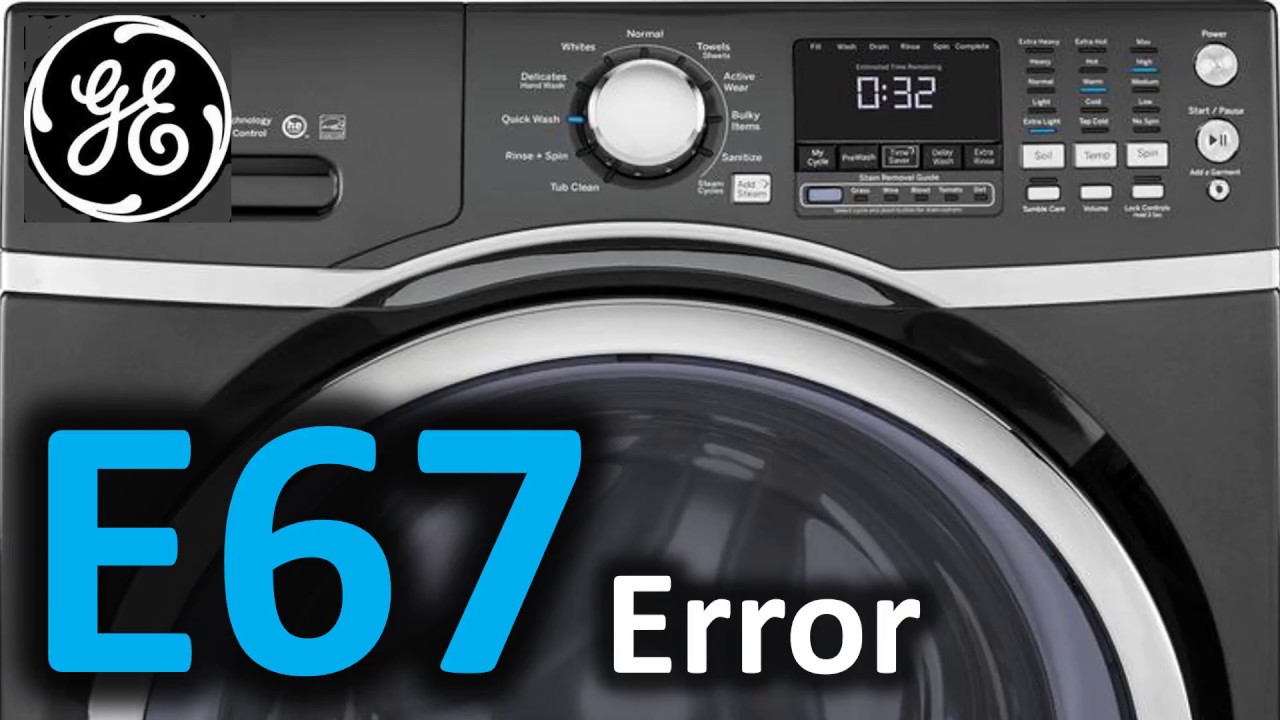
If you’re dealing with the GE washer error code E67, we understand how frustrating that can be. This specific error generally indicates a communication problem within your washing machine, which can disrupt your laundry routine.
Don’t worry; you’re not alone in facing this issue, and many of the causes have simple DIY solutions.
One common reason for this error is faulty wiring that can affect how the washer’s components communicate with each other.
To fully understand and effectively resolve the E67 error, we encourage you to read through the entire post.
You’ll find detailed information about other potential causes and helpful troubleshooting steps to get your washer back in working order.
What Does the Error Code Mean?
What does the error code E67 really signify? When you see this code on your GE washer, it points to a communication error between the control board and other components of the machine. This type of issue is often linked to wiring problems, which can disrupt the signals essential for your washer’s proper operation.
If you’re experiencing this error, it’s important to check for loose connections or damaged wires, as these are common culprits in communication failures. Start by inspecting the wiring harness and connectors for any visible damage or signs of disconnection. If everything appears to be in order but the problem persists, you may want to consider the possibility of a faulty control board.
Addressing these communication issues promptly is crucial. Ignoring them can lead to further complications down the line. Remember, regular maintenance is key to preventing these types of problems. By staying proactive, you can ensure your washer operates efficiently and lasts longer. If you’re unsure about any step, don’t hesitate to consult a professional technician for assistance. Your safety and the longevity of your appliance are paramount.
Common Causes of the Error Code
Understanding the E67 Error Code
Cause 1
If your GE washer is showing the error code E67, it’s likely pointing to a problem with the water level sensor. This sensor plays a crucial role in ensuring your washer operates correctly, and if it fails, it can halt the entire washing process. Regular maintenance on your washer can help prevent such issues, promoting optimal performance.
Here’s a concise breakdown of common causes associated with the E67 error code:
| Cause | Description | Solution |
|---|---|---|
| Faulty Water Level Sensor | The sensor may be damaged or malfunctioning | Replace the sensor |
| Wiring Issues | Loose or damaged connections can disrupt signals | Inspect and repair the wiring |
| Control Board Fault | A malfunctioning control board can cause errors | Replace the control board |
| Software Glitch | A temporary glitch in the software may occur | Reset the washer by unplugging it for a few minutes |
| Blocked Air Tube | A clogged air tube can affect sensor readings | Clear any blockages in the air tube |
Understanding these potential causes will help you interpret the E67 error code more effectively and guide you in taking the right steps toward resolution. Always prioritize safety when working on appliances, and if you’re unsure, don’t hesitate to consult a professional technician.
Cause 2
While a faulty water level sensor is often the primary culprit behind the E67 error code, it’s important to recognize that other factors can also contribute to this issue. One possible cause is a communication failure between the control board and various components of the washer. If the signals aren’t transmitted correctly, your washer may stop functioning altogether.
Another potential problem could stem from wiring issues. Damaged or corroded wires can interrupt the electrical flow, leading to miscommunication between parts. It’s crucial to thoroughly inspect the wiring harness for any signs of wear, fraying, or disconnection. Make sure all connections are secure; this simple step can significantly reduce the chances of the E67 code appearing.
Cause 3
One common cause of the E67 error code in washers is a malfunctioning door lock assembly. When the door lock fails, it can create a communication issue between the control board and the door lock mechanism, which is essential for the washer to operate correctly. Additionally, wiring problems can worsen this situation, preventing signals from being transmitted properly. Below is a reference table to assist you in identifying the potential causes of the E67 error:
| Cause | Description | Solution |
|---|---|---|
| Door Lock Assembly | A malfunction can lead to communication failures | Replace the door lock assembly |
| Wiring Issue | Damaged or frayed wires disrupt communication | Inspect and repair wiring connections |
| Control Board Failure | A faulty control board can cause miscommunication | Test and replace the control board |
| Sensor Malfunction | Incorrect signals sent to the control board | Replace any faulty sensors |
Cause 4
One common cause of the E67 error code in your GE washer is a malfunctioning sensor. These sensors are crucial for monitoring key functions such as water levels and temperature. If a sensor becomes faulty or misaligned, it can disrupt communication between different components, leading to the error code being displayed.
To tackle this issue, it’s important to perform a thorough error diagnosis to pinpoint the exact sensor that’s not functioning properly. Refer to your washer’s manual for detailed procedures on how to replace or recalibrate the sensor. It’s essential to ensure that all sensor connections are secure and free of any corrosion, as poor connections can also contribute to sensor issues.
Required Tools to Fix the Error
Preparing for the Repair Process
Basic Tools
When dealing with the GE washer error code E67, having the right tools is crucial for a smooth and effective repair process. Here’s a list of essential tools that will empower you to tackle this issue confidently:
- Multimeter: This tool is indispensable for testing electrical components within your washer. It allows you to check voltage levels and continuity, which is key to diagnosing any electrical faults.
- Screwdriver Set: A good variety of screwdrivers will enable you to access the internal parts of your washer safely. Make sure to have both Phillips and flathead screwdrivers on hand.
- Pliers: These are great for gripping and manipulating wires. They can help you secure connections or remove components when needed.
- Wire Strippers: If you encounter any damaged connections, wire strippers will assist you in repairing them effectively, ensuring a safe and reliable fix.
- Flashlight: A bright flashlight is invaluable for illuminating dark spaces inside your washer, allowing you to see what you’re working on more clearly during troubleshooting.
- Vacuum or Compressed Air: These can be used to remove any debris or lint buildup inside the machine, which may contribute to performance issues.
With these basic tools at your disposal, you’re well-equipped to implement effective troubleshooting techniques and address the E67 error with confidence. Remember, safety is paramount—always disconnect the power before starting any repairs, and take your time to understand each step of the process. Happy repairing!
Supplies
Having the right supplies is crucial for effectively addressing the GE washer error code E67. This will ensure that you can troubleshoot and resolve any communication errors efficiently and safely. Here’s a list of essential tools and supplies you’ll need:
- Multimeter: This tool is vital for checking the electrical supply and diagnosing potential issues. It allows you to measure voltage and continuity, ensuring that your washer is receiving the correct power.
- Adjustable Wrench: This handy tool will help you tighten or loosen the water supply connections. A secure connection is essential for proper water flow, which is crucial for your washer’s performance.
- Water Pressure Gauge: Measuring the water pressure is important to confirm it meets the washer’s requirements. Too low or too high water pressure can lead to operational issues.
- Screwdriver Set: A good set of screwdrivers will allow you to access the washer’s internal components. This is necessary for any repairs or inspections that may need to be performed.
Having these supplies on hand will empower you to analyze the situation effectively, ensuring that your washer operates under the correct electrical supply and water pressure conditions. By being proactive and prepared, you can save yourself both time and frustration. Remember, safety first: always disconnect power and water before attempting any repairs.
Pre-Safety Checklist Before Fixing
Before you begin addressing the E67 error code on your GE washer, it’s crucial to prioritize your safety. Here’s a straightforward checklist to ensure a safe working environment:
Before tackling the E67 error on your GE washer, ensure your safety with this essential checklist.
- Unplug the Appliance: Start by disconnecting the washer from the electrical outlet. This step is essential to protect yourself from any potential electrical shocks while you work.
- Prepare the Area: Make sure the space around the washer is dry and free from clutter. This will help prevent any tripping hazards and allow you to move around safely.
- Wear Protective Gear: Equip yourself with safety goggles and gloves. This will safeguard you against sharp edges and any electrical components you might encounter during the repair.
- Inspect Cords and Connectors: Before diving into the repair, take a moment to visually check for any signs of damage on the cords or connectors. If you notice any fraying or wear, it’s important to address these issues before proceeding.
- Consult the Manual: Familiarize yourself with your washer’s user manual. It contains important safety information and specific guidelines for your model, which can be invaluable during repairs.
- Stay Focused on Safety: Remember, electrical safety is paramount when working with any appliance. Taking these steps will help prevent injuries and ensure that your washer repair goes smoothly.
Diagnose the Error Code
To diagnose the E67 error code on your GE washer, it’s important to approach the issue methodically. With over 20 years of experience in appliance repair, I’m here to guide you through this process safely and effectively. Let’s get started with some crucial steps:
- Inspect the Control Board: Begin by examining the control board for any burnt components or visible damage. This is a common area where issues can arise, and any signs of damage may indicate a need for replacement.
- Examine Wiring Connections: Next, take a close look at the wiring connections. Check for any signs of corrosion or looseness, as these can disrupt the communication between components. Ensuring a secure connection is vital for proper operation.
- Check for Frayed Wires: Look for any frayed or damaged wires. These can cause shorts or interruptions in communication, leading to error codes. If you find any damaged wires, it’s best to replace them to ensure safety and functionality.
- Test Wire Continuity: Using a multimeter, test the continuity of the wires. This step will help you determine if there’s a break in the circuit that could be causing the E67 error. If the continuity test fails, you may need to replace the affected wiring.
Step-by-Step DIY Troubleshooting Guide
Next Steps for E67 Error Code Troubleshooting
Fix for Cause 1
When you encounter the E67 error code on your GE washer, it’s important to address the issue promptly to prevent any further complications. Here’s a step-by-step guide to help you troubleshoot this error effectively and safely:
- Check Wiring Connections: Begin by inspecting all wiring connections within the washer. Look for any signs of wear, fraying, or disconnection. Ensure that everything is securely connected, as loose or damaged wires can lead to communication problems.
- Examine the Control Board: The control board is the brain of your washer. Carefully inspect it for any visible damage, such as burnt components or discoloration. If you notice anything unusual, the control board may need to be replaced.
- Test the Communication Cable: The communication cable is crucial for the washer’s functionality. Make sure it is securely connected at both ends and check for any signs of damage. A faulty communication cable can disrupt signals between the control board and other components.
- Reset Your Washer: Sometimes, a simple reset can resolve error codes. To reset your washer, unplug it from the wall for about five minutes. After this time, plug it back in and see if the error persists. This can help clear minor glitches in the system.
Fix for Cause 2
After checking for potential wiring issues and inspecting the control board, it’s crucial to address another frequent cause of the E67 error code: the communication between the control board and the motor control unit. Begin by unplugging your washer to ensure your safety. Once that’s done, remove the back panel to access the motor control unit.
Carefully inspect the connections for any signs of corrosion or loose wires, as these can significantly disrupt communication between components. If you notice any corrosion, use an electronic cleaner designed for such tasks to gently clean the affected contacts. After cleaning, ensure that all connections are re-secured firmly.
Once you’ve completed these steps, plug the washer back in and run a test cycle to see if the error persists. Remember, regular maintenance of your washer can help prevent these types of issues, ultimately enhancing the longevity and reliability of your appliance. Understanding how to interpret error codes accurately is essential for effective troubleshooting, so don’t hesitate to refer back to manufacturer guidelines when needed.
Fix for Cause 3
If you’ve already ruled out wiring issues and communication problems, the next crucial step in troubleshooting the E67 error code is to take a close look at the motor. Keeping your washer well-maintained is essential for optimal performance, so here’s a straightforward guide to help you interpret this error code effectively:
- Safety First: Always start by disconnecting power to the washer to ensure your safety while you work.
- Inspect Motor Connections: Carefully check the motor connections for any signs of corrosion or physical damage. Corroded connections can disrupt the motor’s performance and lead to error codes.
- Test the Motor: Use a multimeter to test the motor. This tool will help you verify that the motor is functioning properly. You’re looking for continuity and the correct resistance levels based on the manufacturer’s specifications.
- Replace if Necessary: If your tests indicate that the motor is faulty or not performing as it should, it’s time to replace it. A malfunctioning motor can lead to various issues beyond just the E67 error.
Fix for Cause 4
Once you’ve ruled out any motor issues, the next step in addressing the E67 error code is to examine the control board. Safety is paramount, so begin by unplugging the washer to ensure you’re working in a safe environment. Next, remove the back panel to gain access to the control board.
Take a close look for any visible damage—this could include burned components or loose connections. If you find any signs of trouble, it’s likely time to consider a replacement. To further assess the control board, use a multimeter to check for continuity, making sure that all connections are functioning properly. If your readings indicate irregularities, it may be necessary to order a new control board.
After you’ve replaced the control board, carefully reassemble the washer, plug it back in, and run a test cycle to verify that the error has been resolved. This step is crucial in your troubleshooting process and will help ensure your washer is back to operating efficiently. Remember, taking these steps with caution and thoroughness will empower you to successfully navigate your repair.
Call a Professional If
While troubleshooting your GE washer, it’s important to know when to call for professional help, especially if the E67 error code continues to show up after you’ve attempted basic reset procedures. Ignoring persistent issues can lead to more serious problems and costly repairs down the road. Here are some clear signs that indicate it’s time to reach out to a professional technician:
- You’ve exhausted all available troubleshooting tips and still haven’t resolved the issue.
- The error code keeps reappearing, suggesting there may be an underlying problem that requires expert attention.
- You hear strange sounds or detect unusual odors while your washer is running, which can be indicative of a malfunction.
- You’ve replaced certain parts in hopes of fixing the error, but the problem remains unresolved.
Don’t hesitate to seek expert assistance when you encounter these issues. A qualified technician will have the experience and tools necessary to accurately diagnose the problem and restore your washer to proper working order. Taking prompt action can save you both time and money in the long run, ensuring your appliance operates safely and efficiently. Remember, it’s always better to be safe than sorry when it comes to appliance repairs.